Understanding the Role of Acoustic Louvers in Modern Architecture
In today’s fast-growing urban and industrial environments, noise pollution has become an inevitable challenge. Whether it’s the constant hum of HVAC systems, industrial machinery, or traffic noise infiltrating workspaces, maintaining a quiet and comfortable environment is essential. This is where Acoustic Louvers come into play, serving as a crucial component for achieving both noise control and effective ventilation.
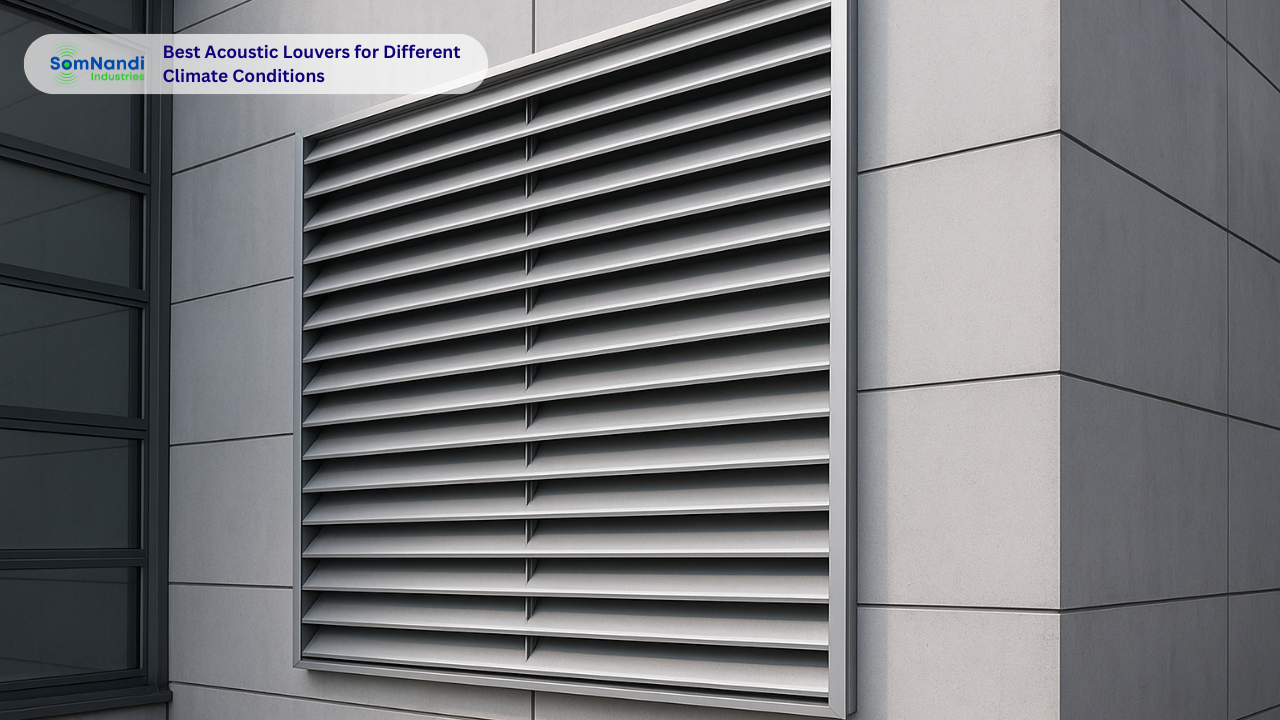
An Acoustic Louver is a specially designed structure that allows air to pass freely while minimizing the transmission of unwanted sound. Unlike regular louvers that are primarily used for ventilation or aesthetics, acoustic louvers are engineered to provide sound attenuation without compromising airflow. They are used in applications such as HVAC systems, generator rooms, compressor enclosures, building facades, and industrial facilities where controlling noise is vital.
However, not all acoustic louvers perform the same way under different environmental conditions. Factors like humidity, temperature, rainfall, dust levels, and wind intensity can affect their efficiency and longevity. Understanding how to choose the best acoustic louvers for different climate conditions ensures long-term performance, durability, and maximum noise reduction efficiency.
In this detailed guide, we’ll explore how climate impacts louver performance, the best materials and designs for each type of environment, and how SomNandi Industries provides high-performance acoustic solutions that adapt seamlessly to any climate.
What Are Acoustic Louvers?
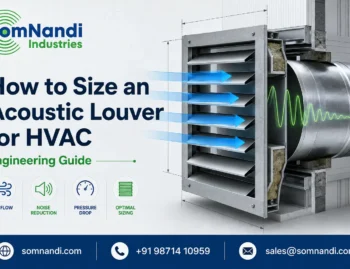
An Acoustic Louver is a sound-attenuating structure that reduces the transmission of airborne noise while permitting adequate airflow. It is commonly made from galvanized steel, aluminum, or stainless steel and includes sound-absorptive materials within its blades or baffles.
Each louver consists of:
- Outer Frame – Provides structural integrity.
- Acoustic Blades – Designed with sound-absorbing infill materials that trap and dissipate noise energy.
- Drainage System – Helps prevent water ingress.
- Protective Coating – Ensures resistance against corrosion and weather effects.
Key Functions of Acoustic Louvers
- Noise Control: Reduces unwanted noise from mechanical or external sources.
- Ventilation: Maintains proper airflow for cooling and ventilation.
- Weather Protection: Shields equipment and interiors from dust, rain, and wind.
- Aesthetic Integration: Blends with modern architectural designs.
How Climate Conditions Affect Acoustic Louvers
Environmental conditions have a direct impact on the performance, durability, and maintenance needs of acoustic louvers. Here’s how various climates influence their functionality.
1. Hot and Humid Climates
In regions with high humidity, such as coastal or tropical areas, moisture can degrade materials over time. Aluminum or stainless steel louvers are ideal here because of their excellent corrosion resistance. Proper drainage and anti-fungal acoustic infill materials ensure long-lasting performance.
Key Design Considerations:
- Use marine-grade aluminum or stainless steel.
- Add anti-corrosive coatings.
- Use moisture-resistant acoustic insulation.
- Incorporate sloped blades for water drainage.
2. Cold and Snowy Climates
Cold climates expose louvers to frost, snow, and ice accumulation. Thermal bridging and condensation can also affect acoustic efficiency. Double-skin louvers with thermal breaks are recommended to maintain consistent performance in low temperatures.
Best Features for Cold Regions:
- Thermal insulation layer.
- Snow and ice protection mesh.
- Heavy-duty blade construction.
- Powder-coated finishes to resist freezing moisture.
3. Dry and Dusty Environments
Industrial zones, deserts, or regions with heavy dust exposure require acoustic louvers designed to block fine particles while maintaining airflow. Dust filters or fine-mesh guards help minimize clogging.
Design Tips for Dusty Conditions:
- Galvanized steel or coated aluminum.
- Replaceable filters for easy cleaning.
- Angled blades to minimize dust buildup.
- Enhanced airflow design to prevent overheating.
4. Coastal and Marine Areas
Salty air is one of the most corrosive environments for any metal structure. Louvers installed near coastlines must have a strong anti-corrosion finish to withstand saltwater exposure.
Ideal Specifications for Coastal Louvers:
- Stainless steel or anodized aluminum.
- Marine-grade coating system.
- Drain channels for saltwater runoff.
- Regular maintenance schedule for surface cleaning.
5. High-Rainfall or Storm-Prone Areas
In areas with frequent rainfall, heavy storms, or monsoon climates, water ingress can reduce acoustic efficiency and damage infill materials. Louvers designed with deeper blades and built-in drainage systems ensure superior weather resistance.
Recommended Features:
- Deep blade profile with rain baffles.
- Waterproof acoustic insulation.
- Self-draining channels.
- Tested rain defense performance (up to Class A standards).
Material Selection for Different Climates
Choosing the right acoustic louver material is critical for ensuring both performance and longevity. Below is a quick reference table to help match materials to environmental conditions.
| Climate Type | Recommended Material | Protective Coating | Key Benefits |
| Hot & Humid | Stainless Steel / Aluminum | Anti-corrosive epoxy or powder coat | Corrosion & moisture resistance |
| Cold & Snowy | Galvanized Steel with Thermal Break | Powder-coated | Withstands freezing conditions |
| Dry & Dusty | Galvanized Steel | Dust-proof mesh, powder coating | Durable and easy to maintain |
| Coastal / Marine | Marine-grade Aluminum / SS316 | Anodized or marine-grade epoxy | Salt corrosion protection |
| Rainy / Storm-Prone | Aluminum / Galvanized Steel | Water-repellent coating | Excellent rain protection & drainage |
Acoustic Louvers Design: Balancing Sound and Airflow
The effectiveness of acoustic louvers design depends on achieving the right balance between airflow rate and sound attenuation. Overly restrictive louvers may improve noise reduction but can cause poor ventilation. Conversely, louvers with wide openings may allow more air but let in more noise.
A professional acoustical louvers manufacturer considers several design parameters, such as:
- Blade Angle and Depth: Determines how much sound is deflected or absorbed.
- Blade Spacing: Affects both airflow resistance and sound attenuation.
- Acoustic Infill Density: Higher density materials offer greater noise reduction.
- Louver Thickness: Thicker assemblies enhance structural rigidity and acoustic absorption.
Modern acoustic louvers suppliers use computational modeling and acoustic simulation to fine-tune these parameters, ensuring each product meets the target acoustic louvers noise reduction level while maintaining efficient ventilation.
Performance Standards and Testing
High-quality acoustic louvers undergo rigorous testing for noise reduction, weather performance, and airflow characteristics. The most reliable products comply with international standards such as:
- ISO 7235 – Measurement of insertion loss of ducted silencers.
- ASTM E90 – Sound transmission loss test.
- AMCA 500-L – Louver performance and water penetration test.
SomNandi Industries follows these global standards, ensuring each acoustic louver provides consistent performance across various climate zones and industrial applications.
Applications of Acoustic Louvers in Different Environments
1. Industrial Facilities
Factories, power plants, and manufacturing units require robust soundproofing for machinery and HVAC systems. Acoustic louvers help reduce external noise emissions while keeping air circulation efficient.
2. Commercial Buildings
Shopping malls, offices, hospitals, and educational institutions use acoustic louvers for ventilation openings without compromising comfort or quietness.
3. HVAC and Cooling Systems
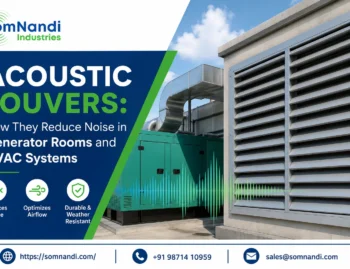
HVAC units and cooling towers generate high decibel levels. Acoustic louvers are used to enclose these systems, offering excellent acoustic louvers noise reduction without airflow loss.
4. Power Generators and Compressor Rooms
Diesel generators and compressors produce low-frequency sounds that can travel long distances. Properly designed acoustic louvers help contain these noises, improving compliance with environmental noise regulations.
5. Architectural Facades
Architects increasingly use acoustic louvers as part of the building’s exterior design to enhance appearance while delivering acoustic performance.
Acoustic Louvers Noise Reduction: How It Works
The noise reduction capability of an acoustic louver is measured in Insertion Loss (IL), which quantifies how much sound is attenuated when passing through the louver.
Here’s a simplified overview of how noise reduction is achieved:
- Sound Absorption: The louver blades are filled with high-density sound-absorbing material that converts sound energy into heat.
- Sound Reflection: The angled blades reflect part of the sound waves away from the opening.
- Multiple Pathways: Sound waves traveling through the louver encounter multiple reflective surfaces, increasing the distance and reducing intensity.
- Frequency Tuning: The design is optimized for the specific frequency range of the noise source, ensuring maximum attenuation.
A well-designed acoustic louver can achieve noise reduction levels between 10–25 dB, depending on blade depth, infill type, and overall construction.
Maintenance and Durability in Different Climates
To ensure longevity and performance, periodic maintenance is necessary. Depending on environmental conditions:
- Humid Areas: Inspect and clean for mold or fungal buildup.
- Dusty Areas: Regularly remove dust from mesh and filters.
- Coastal Regions: Wash with fresh water to remove salt deposits.
- Cold Regions: Check for ice accumulation or blocked drainage.
Using high-quality materials and protective finishes reduces maintenance frequency and ensures optimal performance for years.
Why Choose SomNandi Industries for Acoustic Louvers
SomNandi Industries is a trusted name in the field of acoustic and soundproofing solutions. The company specializes in manufacturing custom-designed acoustic louvers that deliver high efficiency, durability, and superior noise reduction performance under all climatic conditions.
What Sets SomNandi Industries Apart
- Expertise in designing acoustic louvers for every climate.
- Advanced manufacturing with precision engineering.
- High-quality materials like stainless steel, galvanized steel, and aluminum.
- Tested for compliance with international acoustic standards.
- Custom design and installation support for complex projects.
Whether you’re dealing with humid tropical air, coastal salt exposure, or dry industrial environments, SomNandi Industries provides solutions tailored to your unique requirements.
Conclusion: Choosing the Right Acoustic Louver for Your Environment
Selecting the best acoustic louvers for different climate conditions is not just about reducing noise. It’s about ensuring reliability, efficiency, and long-term protection. Each environment presents unique challenges, from humidity and corrosion to dust and temperature extremes.
By understanding these factors and selecting the appropriate acoustic louver design and materials, you can achieve excellent acoustic louvers noise reduction without compromising airflow or durability.
With expertise from SomNandi Industries, you can be confident that every louver is engineered to perform optimally in its environment, combining advanced acoustical engineering, weather resistance, and aesthetic appeal.
Whether for industrial, commercial, or architectural applications, choosing the right acoustical louvers manufacturer ensures sustainable noise control and comfort for years to come.