Spend a few hours inside a running industrial plant and you will understand the problem immediately. It is not just loud — it is relentless. The kind of noise that follows you home, sits behind your eyes, and makes you realise why so many experienced plant workers have trouble hearing in their fifties.
Noise in industrial environments is not a minor inconvenience. It is an occupational health issue, a safety risk, and increasingly a legal liability. The question most facility managers eventually ask is whether anything can actually fix it — not soften it, not manage it with PPE, but genuinely bring it under control.
The short answer is yes. And the solution most engineers reach for when the problem is serious is an acoustic enclosure.
Why Factory Noise Hits Differently
There is a reason industrial noise feels more exhausting than, say, traffic noise at a similar volume. It rarely stops. A diesel generator running backup power, a compressor cycling through production hours, a crusher processing material on a night shift — these are not noise events. They are a constant acoustic backdrop that the body never fully adapts to.
The frequency profile makes things worse. Heavy equipment tends to generate low-frequency noise — the kind you feel as much as hear. That sort of sound does not stay put. It passes through walls, travels along steel beams, and radiates out of floor slabs. Concrete and metal surfaces reflect it back rather than absorbing it, so the noise you measure in the middle of a large production hall is often significantly higher than what the machine itself would produce in open air.
Workers in that environment are not just uncomfortable. They are physiologically stressed, whether they report it or not. Sustained exposure at high decibel levels causes incremental hearing damage that does not show up until years later. It also creates fatigue, increases error rates, and makes communication on the floor genuinely difficult — which is where noise stops being a health issue and becomes a safety one.
The Problem with Earplugs
Most plants hand out hearing protection early and consider the box ticked. Earplugs and earmuffs are legitimate tools, but they do not solve anything. They transfer the burden onto the worker and leave everything else exactly as it was.
Communication gets harder, not easier. Someone wearing hearing protection in a noisy plant is working with a degraded ability to hear instructions, alarms, and the sounds that tell an experienced operator something is going wrong. Precision work becomes riskier. Coordination across a team becomes slower.
There is also the compliance dimension. Regulatory bodies — the Central Pollution Control Board in India, OSHA in the United States, various ISO standards internationally — do not just set limits on how loud a machine can be. They set limits on how much noise a worker absorbs over a full working day. PPE is considered a last resort in the hierarchy of noise controls, not a primary solution. Facilities that rely on it exclusively are often not as compliant as they assume.
The approach that actually satisfies regulators — and actually protects workers — is controlling noise at the source. That is what acoustic enclosures are built to do.
What an Acoustic Enclosure Actually Does
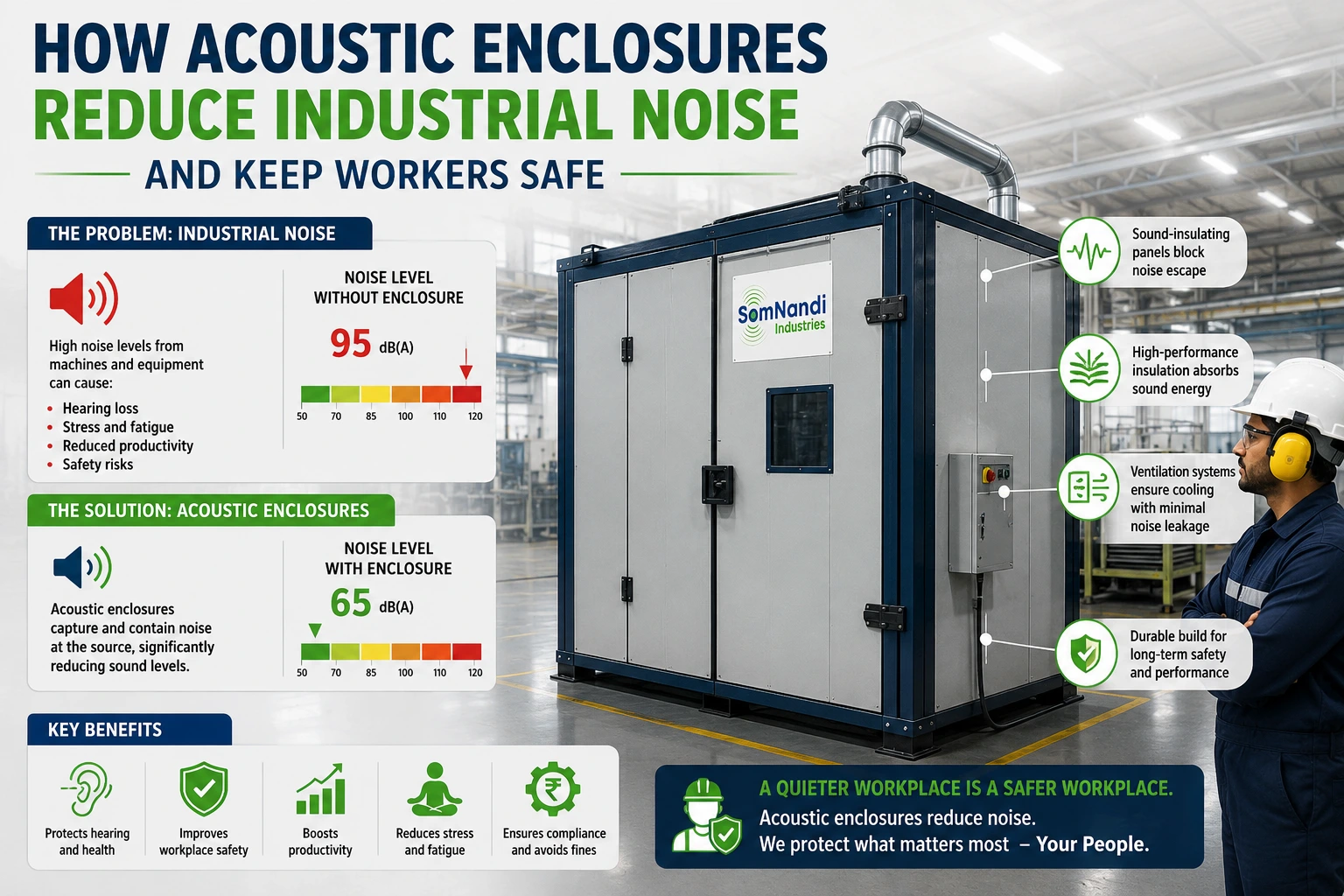
The idea is straightforward even if the engineering is not. You put the noisy machine inside a structure specifically built to stop sound from getting out. The noise still exists inside the Acoustic Enclosures — it just does not reach anyone.
Making that work in practice requires solving a few problems at once.
The walls of the acoustic enclosures need mass. Sound transmission through a panel drops as the panel gets heavier, which is why acoustic enclosures walls are typically steel or aluminum, often with multiple layers. The outer surface reflects noise back inward. An acoustic lining on the inside — usually mineral wool or foam — absorbs what would otherwise bounce around and build up internally. Together, these two mechanisms are what produce the insertion loss that makes how acoustic enclosures reduce industrial noise measurable rather than approximate.
In real-world installations, a well-specified acoustic enclosures delivers somewhere between 25 and 40 dB(A) of reduction. That range matters. Ten decibels is roughly half the perceived loudness, so 30 to 40 dB(A) of reduction is the difference between a machine that is genuinely damaging to work around and one that sits comfortably within legal exposure limits.
Ventilation Is Where Most Cheap Enclosures Fail
Put any industrial machine in a sealed box and you will cook it. Equipment that generates noise also generates heat, and heat has to go somewhere.
This is the part of acoustic enclosure design that separates a product that performs from one that creates new problems. Basic acoustic enclosures cut corners on ventilation and either restrict airflow until the machine runs hot, or they put in unlined openings that let noise straight out.
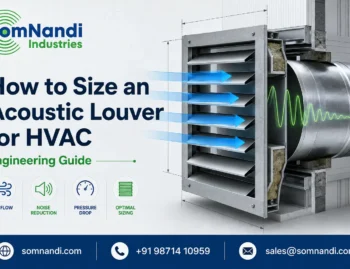
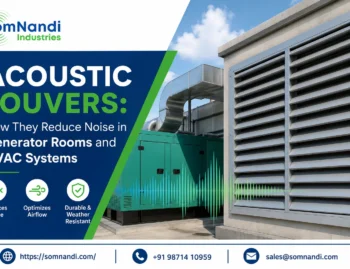
Proper designs use acoustic louvers — specially shaped openings lined with sound-absorbing material that force air to change direction multiple times before exiting. The path airflow takes is long enough to attenuate sound significantly; short enough not to restrict the volume of air the machine needs. Inline silencers on exhaust or intake ducting handle what the louvers do not catch.
It takes more engineering upfront. But it is the reason a quality acoustic enclosures can sit in place for ten years without the client having to choose between keeping the machine cool and keeping the noise contained.
Vibration Is a Separate Problem
Something a lot of buyers do not realise until after installation: an acoustic enclosure treats airborne noise. If the machine is also generating significant vibration through its mounting points, that vibration travels into the floor and building structure and radiates as noise from surfaces well outside the acoustic enclosures. You can build the best acoustic shell in the industry and still have a noise problem if structural vibration is not addressed.
The solution is isolation — anti-vibration mounts under the machine, and in some cases an inertia base, which is essentially a heavy concrete or steel platform that adds mass and decouples the machine from the building structure. This is not always necessary, but for high-output rotating equipment it often is, and skipping it is one of the more common reasons an acoustic enclosures underperforms against its design targets.
Not All Enclosures Are the Same
Diesel generator acoustic enclosures are probably the most familiar type. Generators are noisy, often located close to occupied spaces, and subject to specific CPCB noise limits in India. The acoustic enclosures for them have to manage both a significant acoustic challenge and a very high heat load from the engine. SomNandi Industries has handled a number of these across different generator sizes and site configurations — outdoor substations, rooftop installations, basement plant rooms — and each one ends up being a slightly different engineering problem.
Compressor and blower acoustic enclosures are built around equipment that runs continuously. Maintenance access is a bigger design consideration here, because the machine inside needs to be serviceable without taking the acoustic enclosures apart. Modular panel systems that can be removed section by section are the usual approach.
For larger or more complex equipment — turbines, industrial crushers, multi-machine process lines — there is no standard product that fits. These are custom-engineered from scratch around the actual geometry of the equipment, the layout of the space, and the specific noise reduction targets the client needs to hit. SomNandi Industries does a fair amount of this kind of work, particularly for clients in power generation and heavy process industries where the equipment is large and the noise problems are severe.
Choosing What You Actually Need
The most common mistake is starting with the acoustic enclosures rather than starting with the noise. What frequencies is the equipment generating? How much reduction is actually needed? What does the installation environment look like — indoor or outdoor, cramped or open, hot or temperate?
Those questions determine the specification. Panel thickness, lining type, ventilation design, sealing approach — all of it flows from understanding the actual problem rather than picking something off a product list.
SomNandi Industries starts most projects with a site noise assessment for exactly this reason. Building around real measurements means the acoustic enclosures hits its targets rather than getting close to them. For clients who need to demonstrate compliance to a regulator or certify to a standard, close is not good enough.
A Project That Shows the Difference
A recent SomNandi Industries installation in Hyderabad gives a clear picture of how this works in practice. The client was running heavy industrial equipment in a facility where both on-site noise exposure and external noise emissions had to stay within tight limits.
The design process started with a noise survey. Panels were specified for the frequency profile of the equipment. Ventilation was engineered to handle the heat load without acoustic leakage. Maintenance access was built into the design from the start so the client's team would not have to work around the acoustic enclosures to service the machine.
After installation, the measured noise levels were within the required limits. The equipment continued running without any thermal or operational issues. The client got what they actually needed — not an improvement, a solution.
What It Costs Not to Fix It
This is the question that often reframes the conversation. An acoustic enclosure is not a small purchase, and it is reasonable to weigh it carefully.
What is less often calculated is the accumulated cost of leaving the problem in place. Noise-induced hearing loss claims. Regulatory fines for non-compliance. Higher turnover in roles with the worst noise exposure. The slower, more error-prone work output that comes from people operating in chronically stressful conditions. None of those costs show up on a single invoice, which makes them easy to underestimate until they are large enough to be impossible to ignore.
A well-built acoustic enclosure, maintained properly, lasts for many years. The return on that investment tends to look better the longer the time horizon you use to calculate it.
If noise is a genuine problem at your facility and you have been working around it rather than solving it, it is worth having a proper conversation about what fixing it would actually take. SomNandi Industries offers noise assessments, acoustic enclosures design, manufacture, and installation — and the starting point is usually just understanding what the actual problem is.