Introduction: Why Noise Barriers Are Essential Today
Noise Barriers systems have become a vital solution to combat the rising challenge of noise pollution in today’s urban and industrial environments. With cities expanding rapidly and highways carrying ever-increasing traffic, unwanted sound from vehicles, construction, and machinery disrupts daily life and affects overall well-being. Noise Barriers are designed to effectively absorb or block these intrusive sounds, helping maintain tranquility in nearby residential and commercial areas. Whether used along highways, around factories, or near residential developments, a well-planned Noise Barrier ensures a peaceful environment by minimizing sound transmission and enhancing acoustic comfort.
However, achieving optimal noise reduction requires more than just installing a wall. Factors such as barrier height, material quality, design structure, and installation accuracy play a crucial role in determining its performance. Improperly installed barriers often fail to meet expectations, leading to inefficiency, higher maintenance costs, and reduced lifespan. To ensure long-term effectiveness, it’s essential to understand the common mistakes made during installation and how to avoid them for superior noise control and durability.
In this detailed guide, we’ll explore the top 10 mistakes to avoid when installing a noise barrier and how you can ensure your Highway Noise Reduction Barrier performs effectively for years to come.
1. Ignoring Site-Specific Noise Analysis
Every site is different. The terrain, surrounding structures, and type of noise all play a major role in determining how a Noise Barrier should be designed. One of the biggest mistakes made during installation is skipping a professional noise analysis before construction.
Without understanding how sound behaves in a specific environment, the barrier’s height, length, and material may not be effective. For instance, a barrier placed too far from the source or receiver may fail to block the most critical sound frequencies.
A site-specific acoustic analysis considers:
- Noise source type and intensity (for example, highway traffic or industrial machinery)
- Terrain and elevation differences
- Wind direction and environmental factors
- Reflective surfaces nearby such as buildings or bridges
Tip: Always conduct a detailed noise study before installation. It ensures your Highway Noise Barrier is engineered for maximum sound attenuation and performance.
2. Choosing the Wrong Material
Selecting the right material is one of the most important decisions in building a Noise Barrier on Highway. Many projects fail because the chosen materials do not match environmental conditions or acoustic requirements.
Different materials such as concrete, steel, aluminum, or composite panels offer different benefits and limitations. For example, a Concrete Noise Barrier provides excellent sound reflection and durability, but it is heavier and requires a stronger foundation. In contrast, metal or acrylic barriers may be lighter but less effective in reducing low-frequency noise.
Common mistakes include:
- Using materials that reflect instead of absorb sound in sensitive areas
- Installing non-weather-resistant materials in harsh climates
- Choosing cheaper panels that degrade faster under UV or moisture exposure
Tip: Select materials that are acoustically tested and proven for your environment. For highways, precast concrete or composite materials are ideal for long-term Highway Noise Reduction Barriers.
3. Incorrect Barrier Height and Placement
Even the most advanced Noise Barrier will fail if it’s installed at the wrong height or location. Sound waves travel in straight lines, and if the barrier doesn’t block the line of sight between the noise source and receiver, noise will simply pass over or around it.
A barrier that’s too short or positioned too far from the source may reduce effectiveness by as much as 50%. Similarly, barriers that don’t account for elevation changes or nearby reflective surfaces can unintentionally redirect noise.
Tip: The barrier should be high enough and positioned as close as safely possible to the source, such as the edge of a highway. Always consult acoustic engineers during the planning phase to ensure accurate placement for optimal noise reduction.
4. Neglecting Gaps and Openings
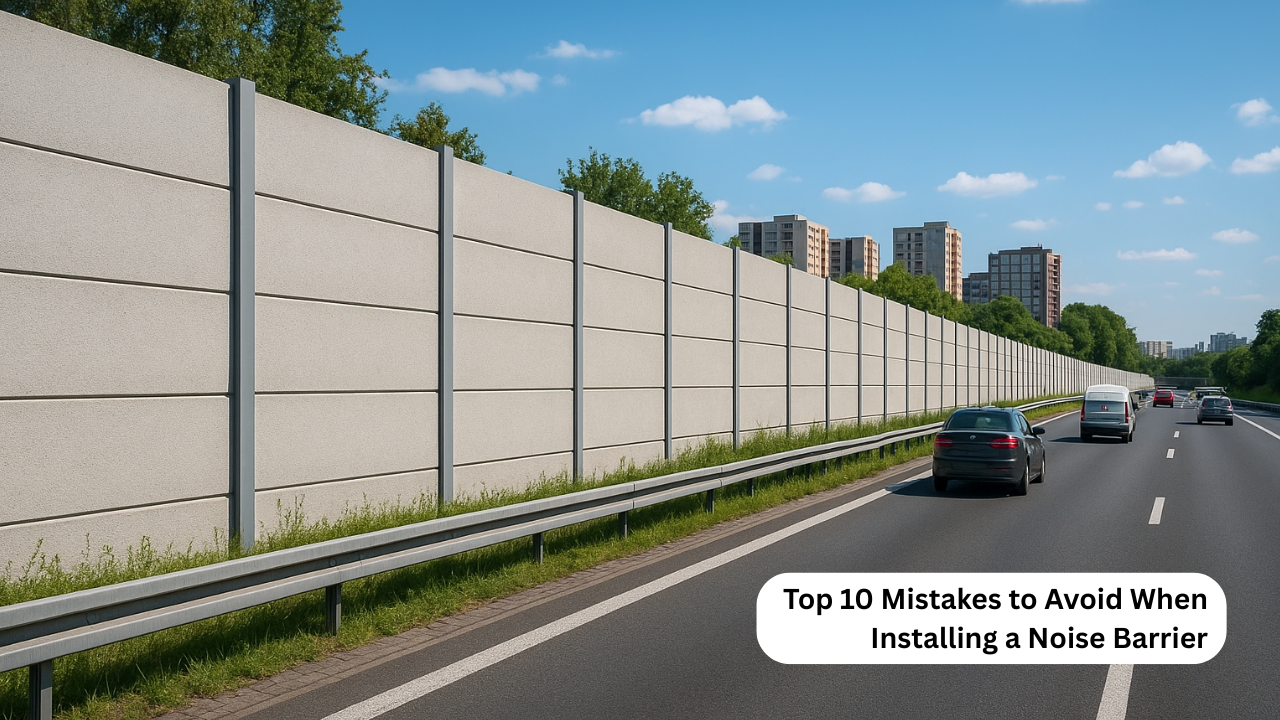
One of the most overlooked issues during installation is small gaps or openings between panels, at the base, or around support posts. Even minor spaces can allow sound to leak through, significantly reducing the overall performance of a Highway Noise Barrier.
These gaps are often caused by uneven terrain, poor ground preparation, or misaligned panels.
Tip: Use overlapping panels or acoustic seals to ensure airtight joints. For Concrete Noise Barriers, apply long-lasting sealants and regularly check for cracks or displacements that may develop over time.
5. Poor Foundation and Structural Design
A Noise Barrier is only as strong as its foundation. A weak or improperly designed foundation can cause barriers to lean, crack, or collapse, especially along highways where they are exposed to constant vibration and wind pressure.
Inadequate foundations can also lead to uneven load distribution, structural instability, and drainage issues that cause soil erosion.
Tip: Hire qualified structural engineers to design a robust foundation. For highways, foundations should be reinforced with high-quality concrete and deep enough to resist wind loads and vibrations caused by heavy vehicles.
6. Overlooking Aesthetics and Design Integration
While the main purpose of a Noise Barrier on Highway is sound control, appearance and environmental harmony also matter. Barriers that look unattractive or out of place can draw public complaints, even if they work effectively.
Modern barriers are not just functional. They can be visually appealing, blending into landscapes or urban architecture. Incorporating color, texture, and pattern can help make barriers more accepted by communities and even improve the visual character of an area.
Tip: Choose materials and finishes that complement the surroundings. Green facades, textured concrete, or transparent acrylic sections can improve aesthetics while maintaining the functionality of Highway Noise Reduction Barriers.
7. Ignoring Weather and Environmental Factors
Weather conditions can significantly impact the performance and durability of a Noise Barrier. Extreme temperatures, rainfall, snow, or high humidity can weaken materials, cause corrosion, and reduce acoustic efficiency over time.
For example, steel barriers may rust without proper coating, concrete can crack under freeze-thaw cycles, and plastic panels may degrade under strong UV exposure.
Tip: Use weather-resistant coatings and materials tested for long-term durability. In high-rainfall regions, ensure proper drainage and moisture control to prevent erosion around the base of the barrier.
8. Using Low-Quality or Non-Durable Materials
Cost-cutting during construction often leads to the use of low-grade materials that may fail prematurely. While saving on initial costs may seem beneficial, it can lead to frequent maintenance, poor noise control, and eventual replacement costs that far exceed the savings.
Tip: Always invest in certified, tested, and durable materials designed for acoustic applications. Quality materials ensure that Concrete Noise Barriers and other barrier types deliver consistent performance and longevity.
9. Skipping Regular Maintenance
Once installed, many Noise Barriers are left without regular inspection or cleaning. Over time, dust accumulation, vegetation growth, or minor damage can reduce their sound-blocking efficiency.
Maintenance is essential to keep barriers in top condition and extend their lifespan. Cracks, rust, or joint loosening can develop unnoticed and worsen over time.
Tip: Create a maintenance schedule that includes periodic inspections, cleaning, and repair of any damaged components. A well-maintained Highway Noise Barrier not only performs better but also maintains its aesthetic appeal.
10. Failing to Meet Local Regulations and Standards
Each region has its own building codes, safety standards, and environmental regulations for noise barriers. Ignoring these can result in project delays, fines, or even removal orders.
Many local authorities have specific requirements regarding minimum barrier height, structural strength, load resistance, and fire safety.
Tip: Before beginning installation, ensure the design and materials meet all local regulations. Working with experienced consultants helps you avoid compliance issues and ensures your Highway Noise Reduction Barrier project is fully approved.
Conclusion: Building Noise Barriers That Truly Work
Installing an effective Noise Barrier requires careful planning, expert design, and proper maintenance. Every mistake, from poor material selection to improper placement, can reduce the system’s efficiency and longevity.
By avoiding the ten common mistakes outlined in this guide, you can ensure that your Noise Barrier on Highway performs as intended, providing maximum noise control, durability, and visual appeal.
When designed and installed correctly, Concrete Noise Barriers and modern soundproofing systems can dramatically reduce the impact of road and industrial noise, creating quieter and healthier spaces for people and communities. Investing in quality materials and professional expertise will always lead to better long-term results and satisfied end users.
SomNandi Industries: Your Trusted Partner for Acoustic Solutions
SomNandi Industries is one of India’s leading manufacturers and installers of high-performance Noise Barriers for highways, industries, and urban environments. With years of experience in acoustic engineering, SomNandi provides complete end-to-end solutions from design and fabrication to installation and maintenance.
Every Highway Noise Barrier designed by SomNandi Industries is engineered for superior performance, weather resistance, and long-term durability. The company focuses on delivering customized solutions that meet client-specific acoustic and aesthetic requirements.
Our Additional Acoustic Solutions Include
- Sliding Partition Systems: Space-saving partitions that combine sound insulation with sleek design, perfect for offices, auditoriums, and conference rooms.
- Acoustic Enclosures: Durable enclosures that reduce industrial equipment noise at its source for a quieter, safer work environment.
- Anechoic Chambers: Precision-built chambers for testing, research, and product development, designed to eliminate all sound reflections.
- Building Acoustics: Comprehensive sound treatment solutions for commercial, residential, and institutional buildings to enhance comfort and privacy.
- Acoustic Ceiling Baffles: Visually appealing ceiling-mounted absorbers that enhance speech clarity and reduce reverberation in large open spaces.
With a commitment to quality, safety, and performance, SomNandi Industries continues to set benchmarks in the field of noise control and acoustic engineering across India.
Frequently Asked Questions (FAQs)
A Noise Barrier is a physical structure that blocks or absorbs sound waves, preventing them from traveling from a noise source (like highways or factories) to nearby residential or commercial areas. They work by either reflecting or absorbing sound energy, depending on their material and design.
The most effective materials for Highway Noise Barriers include precast concrete, metal panels, and composite materials. Concrete is known for its strength and durability, while composite panels are lightweight and provide good sound absorption.
The height of a noise barrier depends on the source of noise and the distance to the receiver. Typically, barriers range between 3 to 6 meters, but a detailed acoustic analysis is essential to determine the optimal height for each location.
Yes. Regular maintenance such as cleaning, inspecting for cracks, and checking seals ensures the Concrete Noise Barrier remains effective over time. A neglected barrier may lose its sound-blocking efficiency.
Absolutely. Modern Noise Barriers can be customized with various textures, colors, and even transparent sections to match the surrounding environment or architectural style.
SomNandi Industries provides expert acoustic solutions backed by technical expertise and industry experience. From Noise Barriers on Highways to Anechoic Chambers and Acoustic Ceiling Baffles, the company ensures every project meets the highest standards of quality and performance.