Noise is easy to ignore until it starts costing you. A loud compressor slows down conversations on the shop floor. A humming generator draws complaints from neighbours. Over the years, constant exposure leads to hearing damage, poor focus and tired workers. This is why noise suppression and cancellation technologies matter in factories, offices, power plants and public spaces.
This article explains how these technologies work, how they differ, and how to pick the right one for your site.
What Is Noise Suppression?
Noise suppression means reducing the level of unwanted sound before it spreads. It works with physical materials and smart design. Sound waves lose energy when they hit dense, absorbent or well-sealed surfaces, so less of the noise reaches the listener.
Common suppression methods include:
Acoustic Enclosures
Wrap around noisy machines like DG sets, blowers and turbines.
Noise Barriers
Placed along roads, railways and plant boundaries to control unwanted noise.
Acoustic Baffles & Ceiling Clouds
Soak up echo and reflected sound inside large halls and high-volume spaces.
Noise Attenuators & Louvers
Allow necessary airflow while reducing the amount of sound passing through ventilation openings.
Acoustic Doors
Seal off loud rooms and help reduce sound transmission through access openings.
These are passive solutions. They need no power, have no moving parts and last for years with basic upkeep.
What Is Noise Cancellation?
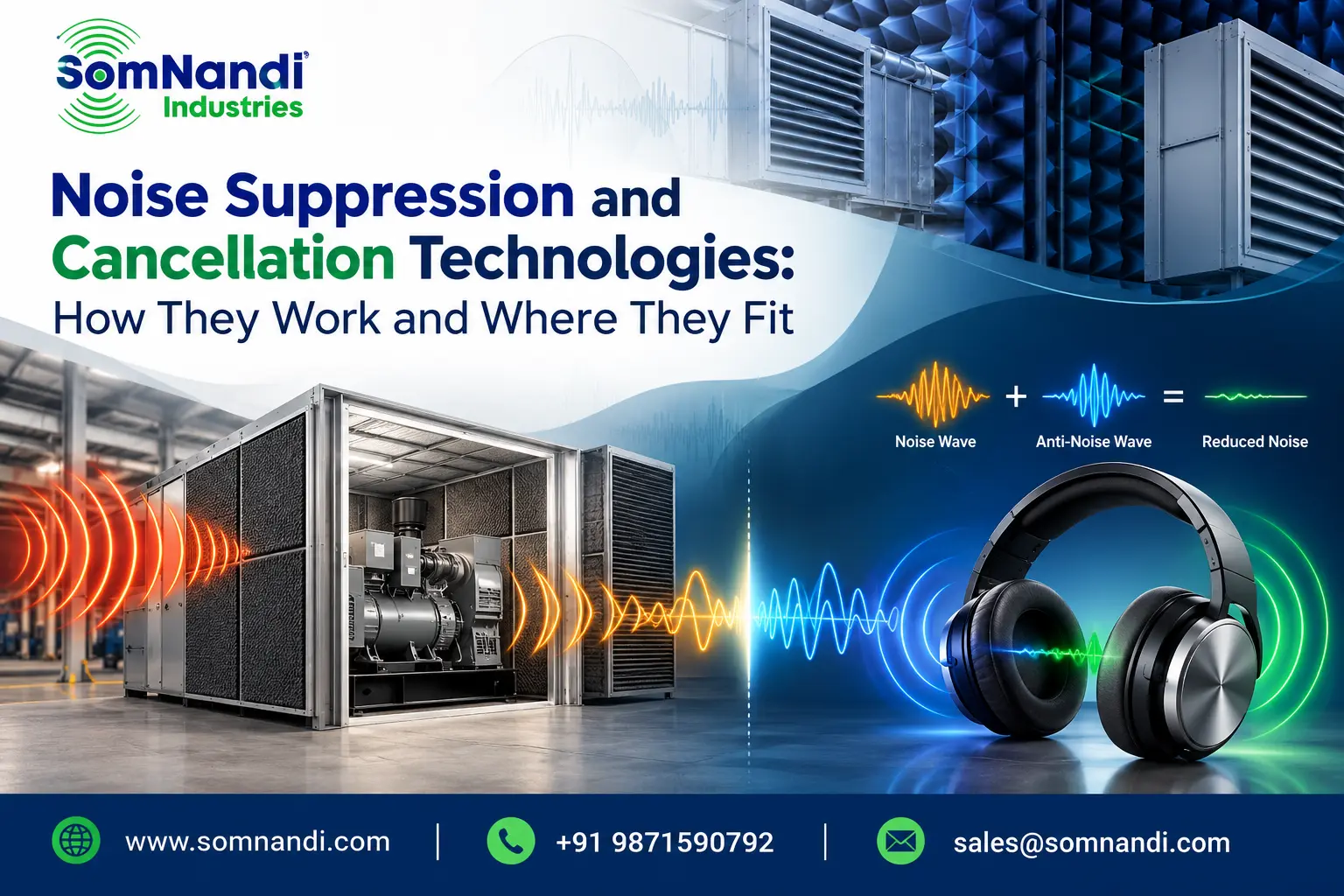
Noise cancellation, often called active noise control, works in a different way. A microphone picks up the incoming sound. A processor then creates a second sound wave that is the exact opposite of the first. When the two waves meet, they cancel each other out.
You already know this from noise cancelling headphones. In industry, the same idea is used in ducts, exhaust systems and HVAC lines, where steady low frequency hum is hard to block with materials alone.
Suppression vs Cancellation: The Key Difference
Passive suppression blocks or absorbs sound using materials. Active cancellation fights sound with sound. Each has its strengths.
| Feature | Passive Suppression | Active Cancellation |
|---|---|---|
| Works Best On | Mid and high frequency noise | Low frequency, steady noise |
| Power Needed | No | Yes |
| Maintenance | Very low | Needs electronics checks |
| Cost | Lower over time | Higher upfront |
| Typical Use | Machines, plants, buildings | Ducts, headsets, cabins |
Most real projects use both. Passive materials handle the bulk of the noise, and active systems deal with what is left in the low range.
Where These Technologies Are Used
- Power and energy: turbine and generator enclosures, exhaust silencers
- Manufacturing: compressor, blower and press enclosures
- Infrastructure: highway and railway noise barriers
- Commercial spaces: auditoriums, offices, studios and meeting rooms
- Testing labs: noise test chambers and anechoic rooms
How to Choose the Right Solution
Start with measurement. Find out the sound level in decibels and the frequency of the noise. A low rumble needs a different fix than a sharp whine.
Next, check the limits you have to meet. Workplace safety norms and local pollution control rules set the target. Then look at the practical side: heat, ventilation, access for maintenance and available space.
Finally, think about the full lifetime cost. A cheap panel that fails in two years is not a saving. Passive solutions with strong build quality usually win on long term value.
Why Work With an Experienced Manufacturer
Noise control is not a one size fits all job. Poor design can trap heat, block airflow or leave gaps that let sound leak out. An experienced team studies the source, models the result and builds to fit. SomNandi Industries designs and manufactures acoustic enclosures, noise barriers, baffles and attenuators for industrial and commercial sites across India, with each solution built around the actual noise problem on site.
Final Thoughts
Noise suppression and cancellation technologies are not competing options. One blocks and absorbs, the other cancels what slips through. Used together, they give you a quieter, safer and more productive space. If you are planning a noise control project, talk to SomNandi Industries and get a solution matched to your machines, your site and your targets.