
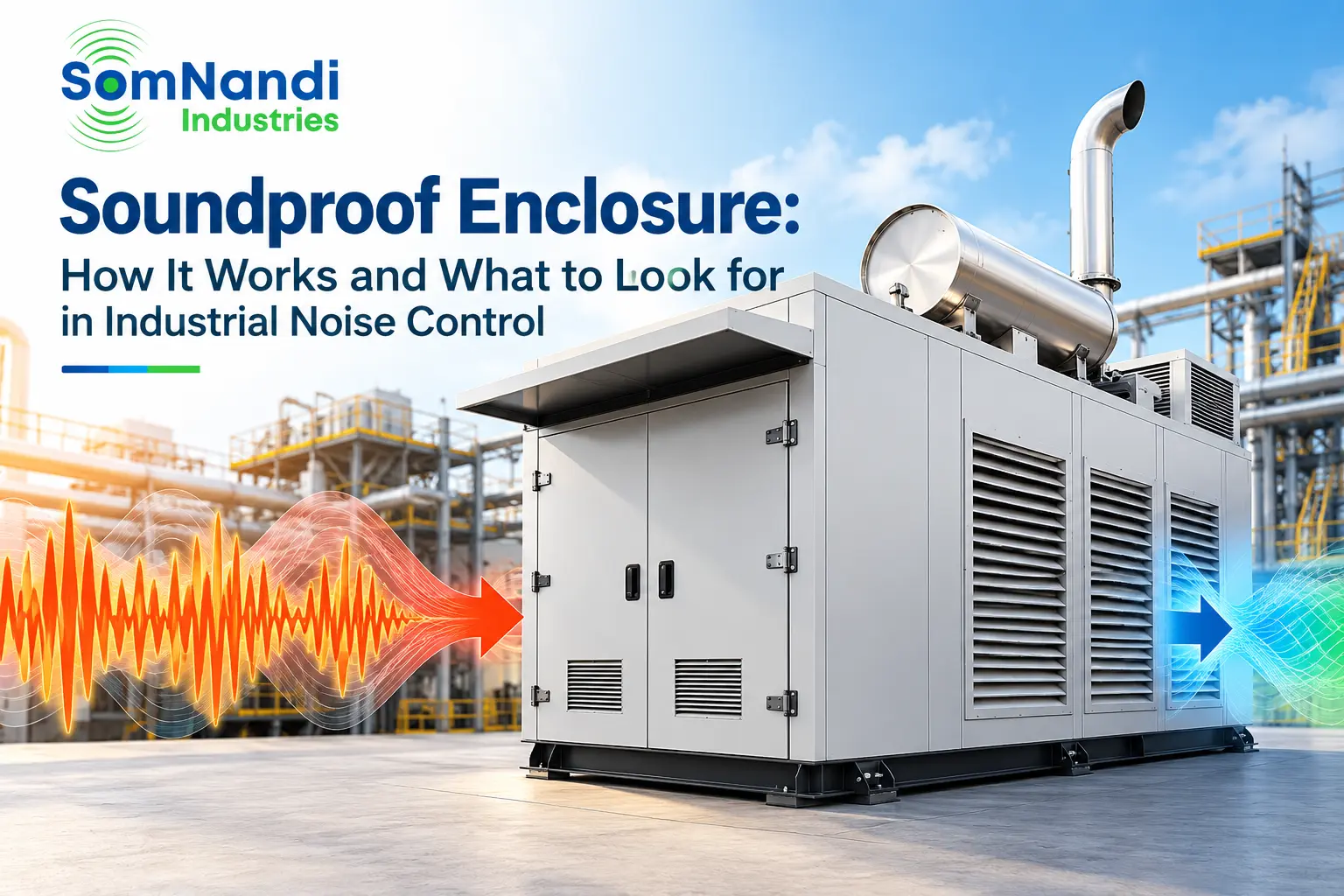
A soundproof enclosure is a closed structure built around a noisy machine or a quiet task to stop sound from escaping or entering. On a factory floor it usually goes around compressors, generators, blowers, pumps, or turbines. In an office it might be a work pod for calls. People also search for it as a noise proof box or a sound dampening box, and the idea is the same: keep the noise contained.
If your plant has workers complaining about constant machine noise, an enclosure is often the most direct fix, because it deals with the problem at the source instead of asking people to wear earplugs all shift.
How a Soundproof Enclosure Actually Works
Four things decide whether an enclosure performs well.
Mass
Sound has a hard time moving heavy, dense walls. Steel panels, MDF, and mass-loaded vinyl are common because they add weight without taking up much room. Thin sheet metal or plastic on its own lets a lot of noise through.
Absorption
The inside of the box needs a porous lining such as mineral wool or acoustic foam. Without it, sound bounces around inside and builds up. Foam alone will not block noise, which is a mistake many first-time buyers make. It only reduces echo.
Airtight Sealing
Sound escapes through the smallest gaps. Door edges, cable entries, and panel joints all need gaskets or acoustic sealant. A good wall with a poor seal performs like a bad wall.
Ventilation
Machines make heat. A closed box with no airflow will cook the equipment inside. Baffled vents or acoustic louvers let air move while keeping most of the noise in.
Common Types of Enclosures
Different jobs call for different builds.
Machine Enclosures: For compressors, blowers, and pumps, usually modular so they can be opened for maintenance.
DG and Turbine Enclosures: Designed for high heat, exhaust routing, and heavy airflow.
Control Cabins and Pulpits: Where operators need a quiet space inside a loud plant.
Test Chambers: Used for noise and vibration measurement.
Work Pods and Booths: For speech privacy in offices.
A small noise proof box for a lab instrument and a full generator enclosure follow the same principles, but the materials, airflow design, and fire requirements are very different.
Materials That Matter
A good soundproof enclosure is a layered build. The outer shell is dense, usually steel or thick board. Inside that sits a damping layer to stop panels from ringing, then a sound absorbing lining. Rubber gaskets seal the doors, and vibration isolators under the machine stop low hum from traveling through the floor. Skipping the isolators is a common reason an otherwise decent box still feels loud.
Mistakes to Avoid
Plenty of enclosures underperform for simple reasons.
Choosing by Thickness Alone: Selecting an enclosure based only on thickness instead of the noise reduction you actually need at the frequencies your machine produces.
Leaving Gaps: Leaving openings around pipes, cables, doors, and panel joints can significantly reduce the effectiveness of the enclosure.
Ignoring Heat: Poor ventilation can lead to equipment shutdowns or result in vents being opened in the wrong place, allowing noise to escape.
Forgetting Maintenance Access: Poorly planned access can result in panels being removed for servicing and never properly reinstalled.
Using a Generic Enclosure: Buying a generic sound dampening box when the machine actually requires a custom-fit acoustic enclosure.
How to Choose the Right Enclosure
Start with the noise level you have today and the level you need to reach. Measure it, do not guess. Then look at the machine itself: its size, heat output, airflow needs, and how often it needs service. A supplier who asks about all of this before quoting is usually a good sign.
Also check the practical details. Does the enclosure meet fire and safety norms for your site? Can it be installed without long downtime? Will panels come apart easily for repairs?
Working With an Industrial Manufacturer
Off-the-shelf boxes work for small desktop equipment. For plant machinery, a custom build almost always performs better because it is sized to the machine and tested for the actual noise it makes. SomNandi Industries designs and manufactures acoustic enclosures for industrial machinery, generators, blowers, and turbines, with ventilation and maintenance access planned into the design from the start.
If you are weighing options for a noisy line or a new installation, SomNandi Industries can help you work out the right enclosure for your equipment and your noise targets.