Blast Resistant vs Explosion Proof Doors is a comparison many safety teams get wrong. The terms sound alike, but they solve different problems. One protects people from an explosion outside the door. The other prevents the door from causing one. This guide helps refineries, architects, plants and commercial developers choose correctly.
What Is the Difference Between Blast Resistant vs Explosion Proof Doors?
What is a blast resistant door?
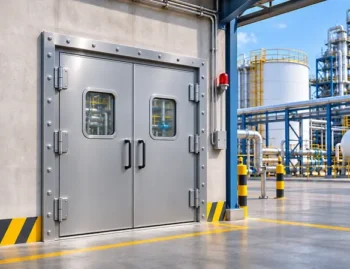
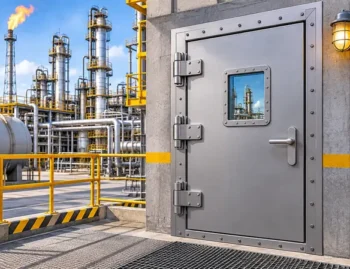
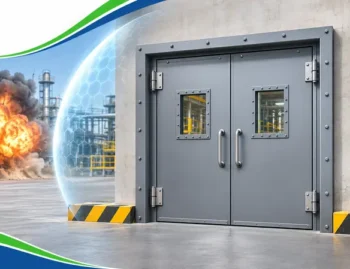
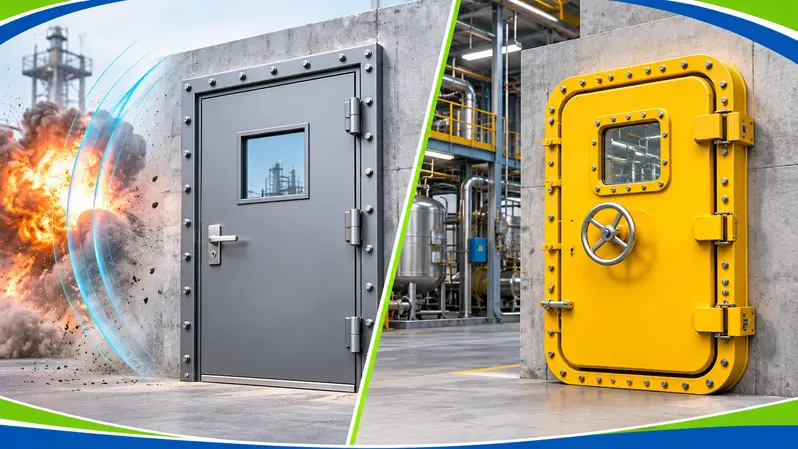
It is an engineered steel assembly that withstands the pressure wave and debris of an explosion while staying sealed and structurally intact. Blast resistant doors are rated to a site-specific peak pressure and impulse.
What is an explosion proof door?
The term usually refers to equipment designed so that an internal spark cannot ignite a hazardous atmosphere around it. The focus is ignition control, not surviving a blast.
Where does an ATEX door fit?
ATEX is a European framework for equipment used in explosive atmospheres. An ATEX door addresses ignition risk. A blast door addresses overpressure. Some sites need both, so confirm the exact requirement with your safety consultant.
For a deeper sector example, read our guide on Blast Resistant Doors for Chemical Plants.
What Are the Benefits of Blast Resistant Doors?
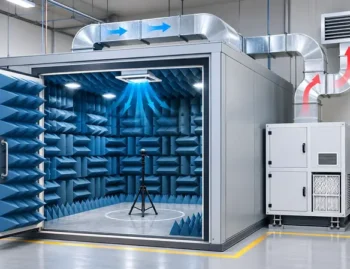
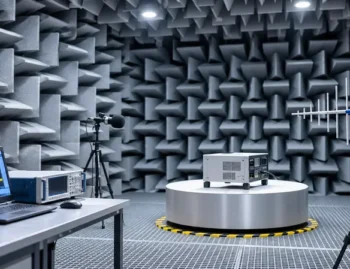
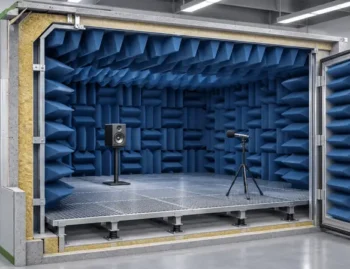
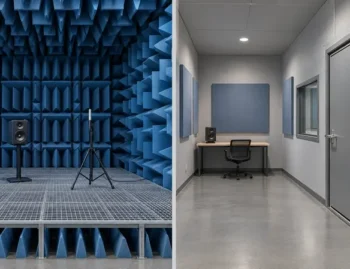
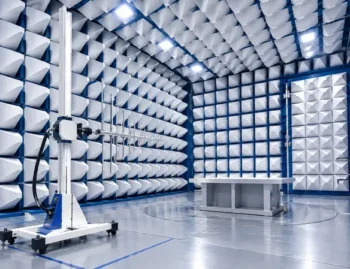
Do blast doors reduce echo?
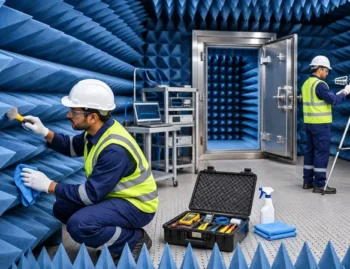
They are built for pressure, not acoustics. SomNandi publishes no NRC or sound reduction figure for these doors, so do not rely on them for echo control. If a control room also needs noise treatment, specify acoustic products separately.
How easy are handling and installation?
These are heavy steel assemblies, so planning matters. The process covers hazard assessment, frame anchorage review, fabrication, sealing, on-site installation, commissioning and handover documentation. Operation can be manual, hydraulic, pneumatic or electric.
Where Are Blast Resistant Doors Used?
Need depends on your hazard assessment, not the building type. Typical uses include:
- Oil and gas facilities and refineries: control rooms and switchgear buildings.
- Manufacturing and power plants: compressor rooms, transformer enclosures and boiler houses.
- Water and wastewater plants: chemical storage and equipment rooms.
- Hospitals and emergency centers: protected critical openings.
- Data centres, airports, metro and railway facilities: critical infrastructure and refuge areas.
- Commercial buildings, hotels and resorts, shopping malls, residential developments and educational campuses: only where a risk study identifies an explosion hazard.
What Affects the Price of Blast Resistant Doors?
No fixed price applies, because each door is engineered to order. The main factors are:
- Dimensions: wider and taller openings cost more to engineer.
- Thickness: set by the required pressure rating.
- Design: single leaf, double leaf or sliding, plus sealing and operation type.
- Quantity: larger orders change fabrication planning.
- Installation: frame anchorage, site access and commissioning.
What Are the Specifications?
| Parameter | Specification |
|---|---|
| Peak reflected overpressure | Up to 40 bar |
| Fire resistance | Up to 180 minutes, BS 476 Part 20 and 22 |
| Configuration | Single leaf and double leaf |
| Maximum size | 4 m wide by 6 m high, custom sizes available |
| Operation | Manual, hydraulic, pneumatic or electric |
| Sealing | Single or multiple gasket systems |
| Special options | EMP protection and radiation shielding on request |
Why Choose SomNandi Industries?
As a Blast Resistant Doors Manufacturer, SomNandi lists ISO certification and more than 150 delivered projects on its website. Published case studies include an IOCL refinery installation at Panipat and a fire-rated double leaf door supplied to L&T. The team designs, fabricates, installs and documents each door.
Frequently Asked Questions:
What is the purpose of a blast resistant door?
It protects critical openings from explosion pressure, debris and fire.
How much does a blast resistant door cost?
Price depends on pressure rating, size, configuration and operation type. Request a quotation for your project.
Are blast resistant doors soundproof?
They are designed for blast protection. No acoustic rating is published, so ask the team before assuming soundproofing.
Which applications need blast resistant doors?
Refineries, petrochemical and chemical plants, power plants, critical infrastructure and any site where a hazard study shows explosion risk.
Do they use recycled materials?
No recycled content or environmental claim is published for these doors. Confirm with SomNandi before including it in a specification.