A blast resistant door protects people and equipment only if every
part still works as designed. Blast Resistant Door Maintenance
means the routine inspection, testing, cleaning and repair of the
leaf, frame, hinges, seals and operating system. This guide is for
refineries, power plants, data centres, hospitals, airports, metro
and railway facilities, hotels, malls, campuses and the architects
who specify for them.
If you are still at the selection stage, read our guide on
how to choose a blast-resistant door
first.
What Does Blast Door Inspection Cover?
How often should a door be inspected?
Follow your site safety plan, the manufacturer’s guidance and local rules. Doors in busy, humid or chemical-heavy areas deserve closer attention.
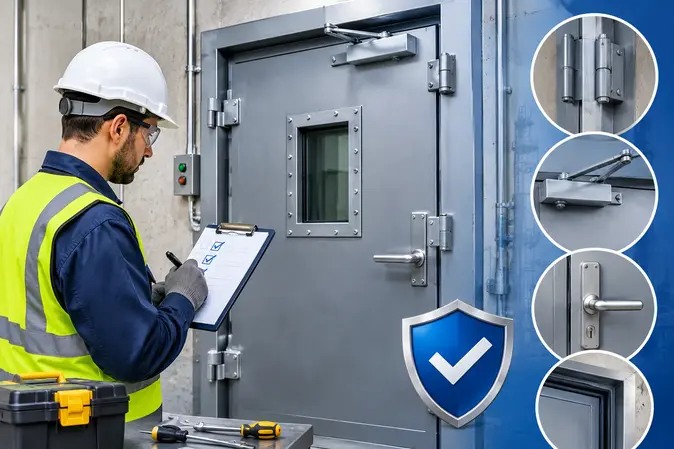
Which parts need checking?
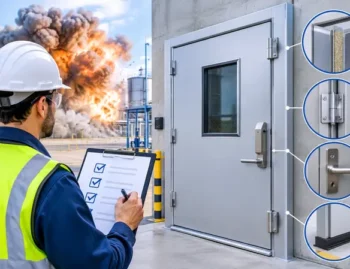
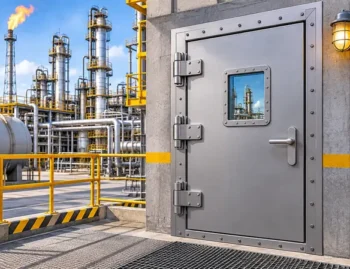
- Leaf and frame: dents, cracks, corrosion and coating damage
- Hinges and anchorage: looseness, wear and movement in the wall interface
- Gaskets: cuts, flattening, hardening or gaps
- Latching and locks: smooth, full engagement
- Operating system: manual, hydraulic, pneumatic or electric action
What Does Blast Door Servicing Involve?
What is door hardware upkeep?
Door hardware upkeep covers lubrication, fastener checks and replacement of worn parts, using the maker’s approved methods. Keep a dated log of each visit.
Why do seals matter so much?
Seals keep the opening airtight. SomNandi’s technical data lists single or multiple high-performance gasket systems, so worn gaskets are a leading item to replace.
Where Is Blast Resistant Door Maintenance Applied?
- Manufacturing and power plants
- Commercial buildings, shopping malls, hotels and resorts
- Data centres and hospitals
- Airports, metro and railway facilities
- Oil and gas facilities, water and wastewater plants
- Residential developments and educational campuses
What Are the Verified Specifications?
| Parameter | Specification |
|---|---|
| Peak reflected overpressure | Up to 40 bar |
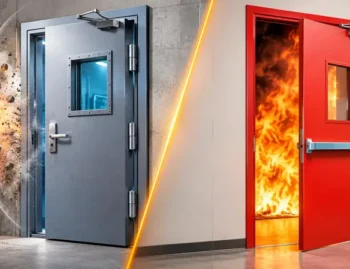
| Fire resistance | Up to 180 minutes, BS 476 Part 20 and 22 |
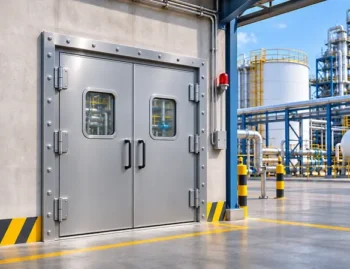
| Configuration | Single leaf and double leaf |
| Maximum size | 4 m wide by 6 m high, custom sizes available |
| Operation | Manual, hydraulic, pneumatic or electric |
| Sealing | Single or multiple gasket systems |
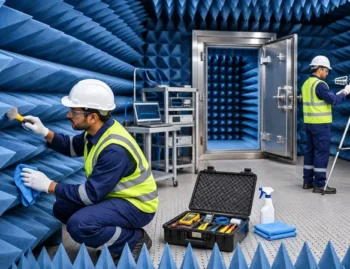
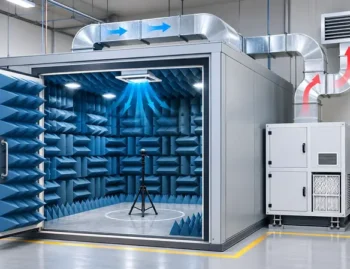
| Special options | EMP protection and radiation shielding on request |
Why Choose This Blast Resistant Doors Manufacturer?
As a Blast Resistant Doors Manufacturer , SomNandi Industries states that it is ISO certified and has delivered 150+ projects. Published case studies include a double leaf fire-rated door supplied to L&T and an installation at the IOCL Refinery, Panipat. Its team handles fabrication, installation, commissioning and handover documentation.
Frequently Asked Questions:
What is the purpose of a blast resistant door?
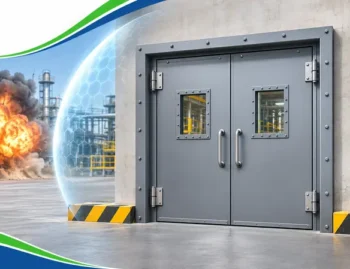
It protects critical openings from explosion pressure, debris and fire.
How much does a blast resistant door cost?
Price depends on rating, size, configuration and operation type. Request a quotation for your project.
Is a blast resistant door soundproof?
SomNandi does not publish sound reduction figures for these doors. Their purpose is blast and fire protection. For noise control, ask about its acoustic doors.
Where are blast resistant doors used?
They are used in oil and gas, petrochemical, defence and nuclear sites, and in other facilities where a risk assessment requires them.
Are recycled materials used?
SomNandi does not publish recycled content or environmental claims for these doors. Please confirm with the sales team.