Knowing how to choose a blast resistant door starts with one fact: no single door suits every site. A door must match the blast load, fire risk and opening it protects. This blast door buying guide gives facility teams a simple way to compare options.
What Is a Blast Resistant Door and Who Needs One?
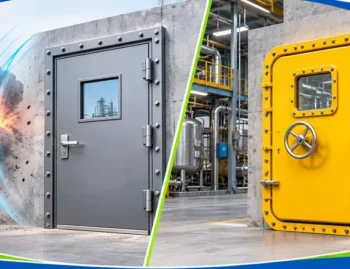
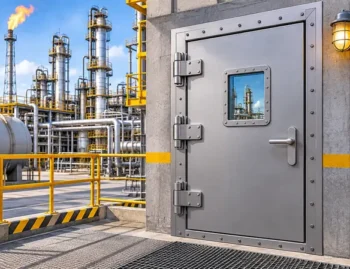
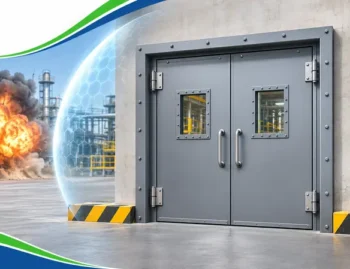
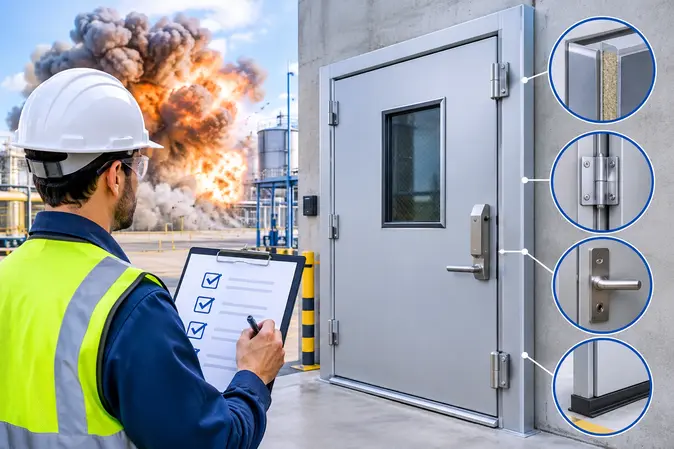
A blast resistant door is an engineered steel assembly built to withstand explosion pressure and debris while keeping the opening sealed. Gas refineries, architects, manufacturing plants, power plants, data centres, hospitals, airports and water treatment plants all ask about them during planning.
How to Choose Blast Resistant Door: The 8-Point Checklist
What blast load must the door withstand?
Ask for the peak pressure and impulse from your site hazard assessment, not a generic figure. SomNandi doors are rated up to 40 bar peak reflected overpressure.
What fire rating is required?
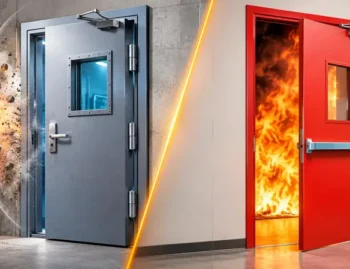
Blast and fire ratings are tested separately. A higher fire rating does not mean a higher blast rating. Our doors offer fire resistance up to 180 minutes under BS 476 Part 20 and 22. Our guide on blast resistant door vs fire door explains when you need each.
What size and configuration fit the opening?
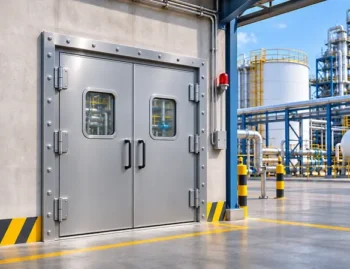
Single leaf doors suit standard openings. Double leaf doors suit wider ones. Sizes go up to 4 m wide by 6 m high, with custom dimensions available.
Are the frame and hinges matched to the leaf?
A strong leaf fails if the frame anchorage is weak. Check that hinges and anchoring match the pressure rating.
How is the door sealed?
Multi-gasket systems keep the opening airtight under explosion conditions.
How will the door operate?
Options include manual, hydraulic, pneumatic or electric. Choose based on traffic and egress needs.
Do you need special protection?
EMP protection and ionizing radiation shielding are available on request.
Who handles documentation and installation?
Choose a partner that covers fabrication, installation, commissioning and handover records.
What Are the Benefits of the Right Door?
Correct selection gives protection from pressure, debris and fire in one assembly. Handling is simpler when the door is engineered to your opening, with a defined installation process: hazard assessment, frame anchorage review, fabrication, sealing, on-site mounting and commissioning.
Blast doors are not acoustic products. We do not publish an NRC value or echo reduction figure for them, so do not specify them for echo control.
Where Are Blast Resistant Doors Used?
Verified uses include refinery control rooms, switchgear buildings, compressor rooms, transformer enclosures, refuge areas and nuclear power stations. Other sites such as data centres, hospitals, airports, metro and railway facilities, water plants, malls, hotels, campuses and residential developments should decide by hazard assessment.
What Affects Pricing?
These factors drive cost:
- Dimensions: wider and taller openings cost more.
- Thickness: set by the pressure rating.
- Design: single or double leaf, sliding or hinged, operation type.
- Quantity: project volume.
- Installation: site conditions and commissioning scope.
Which Specifications Should You Compare?
| Parameter | Specification |
|---|---|
| Peak reflected overpressure | Up to 40 bar |
| Fire resistance | Up to 180 minutes, BS 476 Part 20 and 22 |
| Configuration | Single leaf and double leaf |
| Maximum size | 4 m wide by 6 m high, custom available |
| Operation | Manual, hydraulic, pneumatic or electric |
| Sealing | Single or multiple gasket systems |
| Special ratings | EMP and radiation shielding on request |
Why Choose SomNandi Industries?
As a Blast Resistant Doors Manufacturer , SomNandi designs each door to site conditions. The company is ISO certified, with 150+ projects delivered, including refinery installations in India.
Frequently Asked Questions:
What is the purpose of a blast resistant door?
It protects critical openings from explosion pressure, debris and fire.
How much does a blast resistant door cost?
Price depends on pressure rating, size, configuration and operation type. Request a quotation for your project.
Is a blast resistant door soundproof?
We do not publish soundproofing data for these doors. For noise control, see our acoustic door range.
Where are blast resistant doors used?
They are used in refineries, petrochemical and power facilities, control rooms and other high-risk areas.
Are blast resistant doors made from recycled materials?
We have no verified recycled content data, so we make no claim. Ask our team for material details.