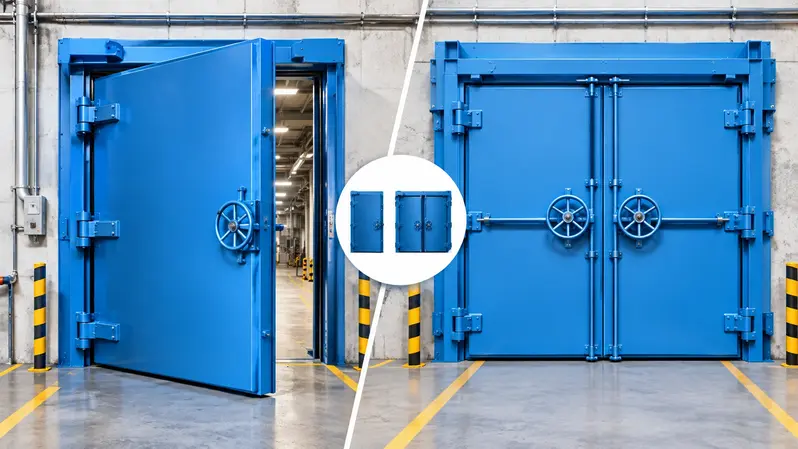
Single vs Double Leaf Blast Doors
Choosing between Single vs Double Leaf Blast Doors affects safety, daily access and project cost.
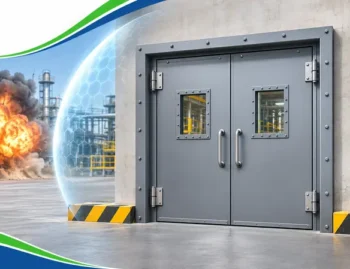
A blast resistant door protects an opening from explosion pressure and debris. The leaf configuration decides how the door seals, swings and fits the wall.
What Is the Difference Between Single vs Double Leaf Blast Doors?
The main difference between single and double leaf blast doors is the number of steel leaves used to close the opening.
Single Leaf Blast Door
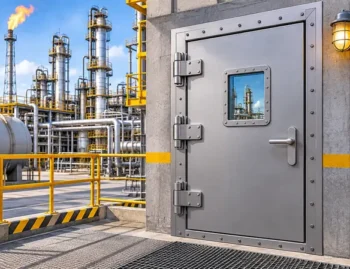
A single leaf blast door has one steel leaf that closes the doorway.
Double Leaf Blast Door
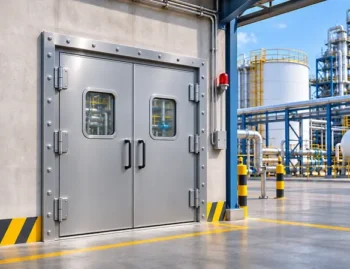
A double leaf blast door has two leaves that close together at the centre.
A blast resistant doors manufacturer can supply either type, as well as sliding versions for locations with restricted swing space.
What Are the Pros and Cons of Each?
Single Leaf Blast Door
- Fewer seals and hinges to inspect
- Simple operation for personnel access
- A good fit for control rooms and switchgear entries
- Limited by opening width
- A heavier leaf as the opening grows
Double Leaf Blast Door
- Suits wide equipment room openings
- Each leaf is lighter than one large leaf
- Allows partial opening for personnel
- A centre meeting point needs careful sealing
- More hardware to maintain
Which Is Easier to Handle and Install?
Single Leaf Doors
Single leaf doors are quicker to hang.
Double Leaf Doors
Double leaf doors split the weight, which can ease transport and lifting on congested sites.
Installation follows the same path for both: hazard assessment, frame anchorage review, fabrication, sealing, on-site mounting, commissioning and handover.
Why frame anchorage matters: Frame anchorage matters most, because a door can meet its rating on paper and still underperform if the frame or hinges are under-specified.
Plan inspections early, and see our guide on Blast Resistant Door Maintenance .
Where Are They Used?
The application of these solutions depends on the specific hazard assessment and site requirements. Typical sectors and facilities include:
Gas Refineries, Oil & Gas Facilities, and Power Plants
Manufacturing Plants, Water and Wastewater Plants
Data Centres and Hospitals
Commercial Buildings, Malls, Hotels and Resorts
Airports, Metro and Railway Facilities
Educational Campuses and Residential Developments
SomNandi Industries: Documented Project Experience
SomNandi has documented a refinery installation at IOCL Panipat and a fire-rated double leaf door for L&T, demonstrating experience across industrial and infrastructure applications.
What Affects Blast Resistant Doors Price?
The price of blast resistant doors depends on several engineering, design and project-related factors. These key considerations drive the overall cost:
Dimensions
Wider and taller door openings require additional engineering and structural considerations.
Thickness
Door thickness is determined by the required blast pressure rating and project specifications.
Design
Single-leaf, double-leaf, hinged or sliding configurations, along with operation type, influence the cost.
Quantity
Total project volume can affect manufacturing planning, material requirements and overall pricing.
Installation
Site accessibility, wall interface requirements and commissioning influence installation costs.
What Are the Verified Specifications?
Key technical specifications and available configurations.
| Parameter | Specification |
|---|---|
| Configuration | Single leaf and double leaf |
| Peak reflected overpressure | Up to 40 bar |
| Fire resistance | Up to 180 minutes, BS 476 Part 20 and 22 |
| Maximum size | 4 m wide by 6 m high, custom sizes available |
| Operation | Manual, hydraulic, pneumatic or electric |
| Sealing | Single or multiple gasket systems |
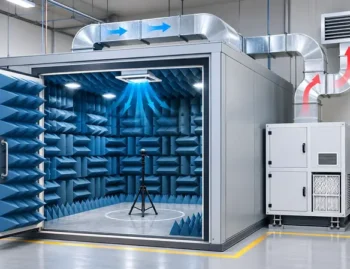
| Special options | EMP protection, ionizing radiation shielding on request |
Why Choose SomNandi Industries?
SomNandi is an ISO certified manufacturer with 150+ projects delivered. Doors are engineered to your blast and fire rating, then fabricated, installed and documented by the same team. Each assembly is customised to the application and site conditions.
Frequently Asked Questions
Find answers to common questions about blast resistant doors, applications, pricing and specifications.