
Serving Industries Across India
Bullet Resistant Doors Manufacturer in India
Bullet Proof Doors for Banks, Government Buildings, Embassies & Critical Infrastructure
Summary: A bullet resistant door is an engineered door assembly built around a ballistic-rated core that stops or significantly slows projectile penetration while working as a fully functional, code-compliant door. This page is written for security consultants, facility managers and procurement teams who need a certified bullet resistant door manufacturer.
Each door is built to your required ballistic level and finished to match your building, then supplied and installed by our team.
- Tested to FSG and FB2 to FB4 levels (aluminium armour)
- FB5 protection with steel armour plating
- ISO certified manufacturer · 150+ projects delivered
SomNandi Industries manufactures bullet resistant doors independently tested to European ballistic classification levels FSG, FB2, FB3, and FB4 with aluminum armor plating, and FB5 with steel armor plating, for banks, government buildings, embassies, and critical infrastructure. A bullet resistant door, also called a bullet proof door, is an engineered door assembly built around a ballistic-rated core designed to stop or significantly slow projectile penetration while remaining a fully functional, code-compliant door. This page is written for security consultants, facility managers, and procurement teams at banks and financial institutions, correctional facilities, police stations, and government installations who need a certified bullet resistant door manufacturer with independently verified ballistic ratings, not a marketing claim alone.
Why Certification Is the Only Thing That Actually Matters Here
The single biggest mistake buyers make when specifying bullet resistant doors is treating ballistic rating as a spec sheet line item instead of an independently tested and certified outcome. A door that has not been tested against a recognized ballistic classification standard cannot reliably tell you what threat level it actually stops, handgun rounds, rifle rounds, or shotgun slugs behave completely differently against the same core material. Every Somnandi bullet resistant door is independently tested and certified against recognized international and national ballistic performance standards, which is what separates a genuinely rated door from a heavy steel door sold on assumption.
What Is Bullet Resistant Doors?
Bullet resistant doors are security door systems engineered with a ballistic-rated core designed to stop or resist projectile penetration while functioning as a normal operable door for daily use. Somnandi Industries builds these doors around a strong interior core of ballistic composite material, clad in a durable, impact-resistant surface finish, with rounded, field-replaceable edges that extend service life and simplify maintenance in high-use or high-abuse areas such as guard booths and correctional facility corridors. Our bullet proof doors are available across a range of sizes, finishes, and color options, so security performance does not require sacrificing architectural fit.
Bullet Resistant Doors vs Blast Resistant Doors: What Is the Actual Difference?
Bullet resistant doors are engineered against ballistic impact, a projectile striking a small, concentrated area at high velocity, while blast resistant doors are engineered against blast overpressure, a distributed pressure wave acting across the entire door surface. The materials and failure modes are different enough that a door rated for one threat is not automatically rated for the other. Many of our clients in banking, government, and critical infrastructure need both threats addressed on the same opening, which is why Somnandi builds bullet proof and blast resistant doors as a combined-rated assembly rather than asking clients to choose one protection type over the other.
How Are Bullet Resistant Door Ballistic Ratings Actually Classified?
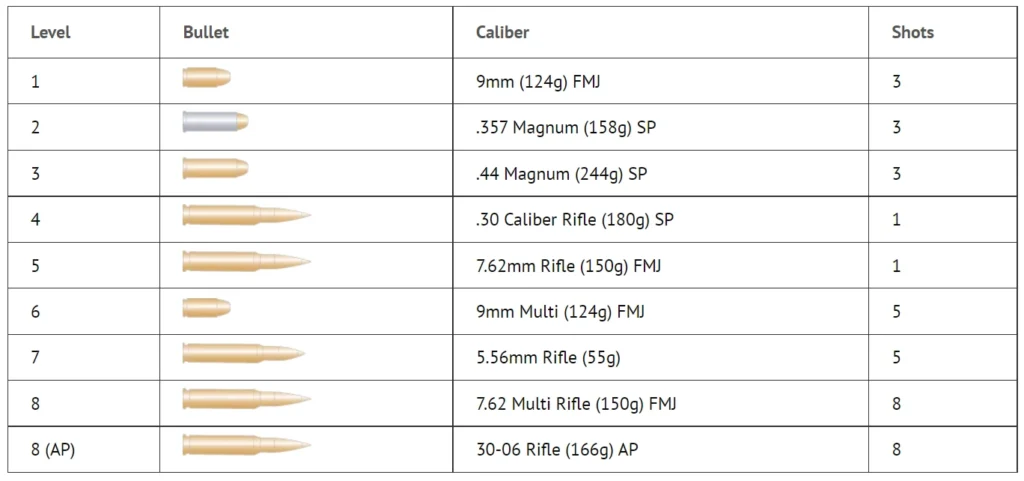
Short answer: Ballistic classification is determined by armor plating material and thickness tested against specific ammunition types and velocities under a recognized standard, not a single blanket “bulletproof” label. With aluminum armor plating, Somnandi doors achieve ballistic classification levels FSG, FB2, FB3, and FB4 under European standards. With steel armor plating, the achievable range extends to FB5. Higher classification levels correspond to protection against progressively higher-powered ammunition, from handgun rounds at lower levels up to high-powered rifle rounds at the upper end of the scale.
Technical Data Sheet
| Parameter | Specification |
|---|---|
| Product Name | Bullet Resistant Door / Bullet Proof Door |
| Core Material | Ballistic composite core, wood or steel options |
| Cladding | Impact-resistant surface finish, field-replaceable edges |
| Ballistic Rating (Aluminum Armor) | FSG, FB2, FB3, FB4 per European standards |
| Ballistic Rating (Steel Armor) | FB5 per European standards |
| Armor Configuration | Single or dual line, frame or leaf integrated |
| Combined Ratings Available | Bullet resistant, forced entry, and blast resistant |
| Certification | Independent laboratory testing and certification |
Specifications, Benefits, Applications and Installation Process for Bullet Resistant Doors
What Does a Ballistic Classification Level Actually Protect Against?
Somnandi bullet resistant doors range from FSG and FB2 through FB4 with aluminum armor plating, up to FB5 with steel armor plating, covering threats from handgun ammunition at the lower classification levels through high-powered rifle rounds at the upper end. Selecting the right level depends on a realistic threat assessment for the site, a bank teller counter and a police armory rarely need the same rating, and over-specifying steel armor plating where aluminum would suffice adds unnecessary weight and cost to the door system.
Combining Ballistic, Forced Entry, and Blast Protection in One Door
What sets Somnandi apart is the ability to integrate multiple threat-resistant technologies into a single door unit. We do not offer ballistic resistance alone, our bullet resistant door systems can combine forced entry resistance and explosion resistance in any combination required, giving facilities protection against a series of hostile hazards without installing separate door systems for each threat type. This matters most for correctional facilities, military bases, and high-risk government installations where a single opening can face more than one threat category simultaneously.
Custom Bullet Proof Door Design and Materials
Our advanced designs include single or dual line armor plating, integrated seamlessly into the outer frame, the door leaf, or both, depending on the safety specification. We also offer bullet resistant wood doors, combining the visual character of wood with the durability of ballistic-rated materials, alongside steel bullet resistant doors and aluminum-clad options selected based on the required ballistic rating, from handgun resistance through high-powered rifle protection. Every custom bullet resistant door is engineered around the client’s actual threat profile rather than a fixed catalog configuration.
Beyond Doors: Comprehensive Security and Blast Protection
Alongside bullet resistant doors, SomNandi Industries provides a broader range of safety and security solutions built for high-risk environments. Our explosion resistant barriers offer robust protection against blast events, our blast proof enclosures shield sensitive equipment and personnel from explosive threats, and our blast resistant partitions integrate safety performance into a space without compromising its architectural appearance.
Myth vs Reality
| Myth | Reality |
|---|---|
| Any thick steel door is bullet resistant | Only independently tested cores carry a real rating |
| One rating level stops all ammunition types | Higher FB levels are needed for rifle-grade threats |
| Bullet proof doors cannot look architecturally normal | Finishes and colors blend with standard building design |
| Ballistic and blast resistance are the same rating | Each threat is tested and rated separately |
| Wood core doors offer no real ballistic protection | Ballistic composite wood cores meet certified FB ratings |
Related Guides and Case Studies
Frequently Asked Questions
What is a bullet resistant door used for?
What is the difference between FB2 and FB5 rated doors?
Are bullet proof doors also fire rated?
Can bullet resistant doors also resist blasts?
What material is used inside a bullet proof door?
Do bullet resistant doors come in wood finishes?
Which industries need high security doors most?
How is a bullet resistant door rated for performance?
Can bullet proof doors be customized in size?
Do bullet resistant doors block sound as well?
Secure Your Facility With Certified Bullet Resistant Doors
SomNandi Industries is a bullet resistant door manufacturer in India delivering independently certified, custom-rated door systems for banks, government buildings, embassies, and high-security facilities. Share your threat assessment and application, and our engineering team will recommend the right ballistic classification, core material, and combined protection package for your site.