Summary: Every generator room, chiller plant, or rooftop HVAC installation faces the same design challenge: the equipment needs a constant supply of fresh air, but every open vent is also an open path for noise. Acoustic louvers solve this problem by allowing air to move freely while blocking and absorbing the sound that would otherwise escape through the same opening. For facility engineers and consultants working on generator enclosures, chiller yards, or substation ventilation, understanding how they work is the first step toward meeting noise compliance without compromising cooling performance.
What Are Acoustic Louvers and How Do They Work?
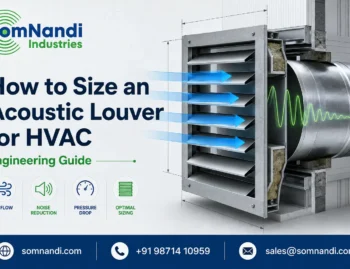
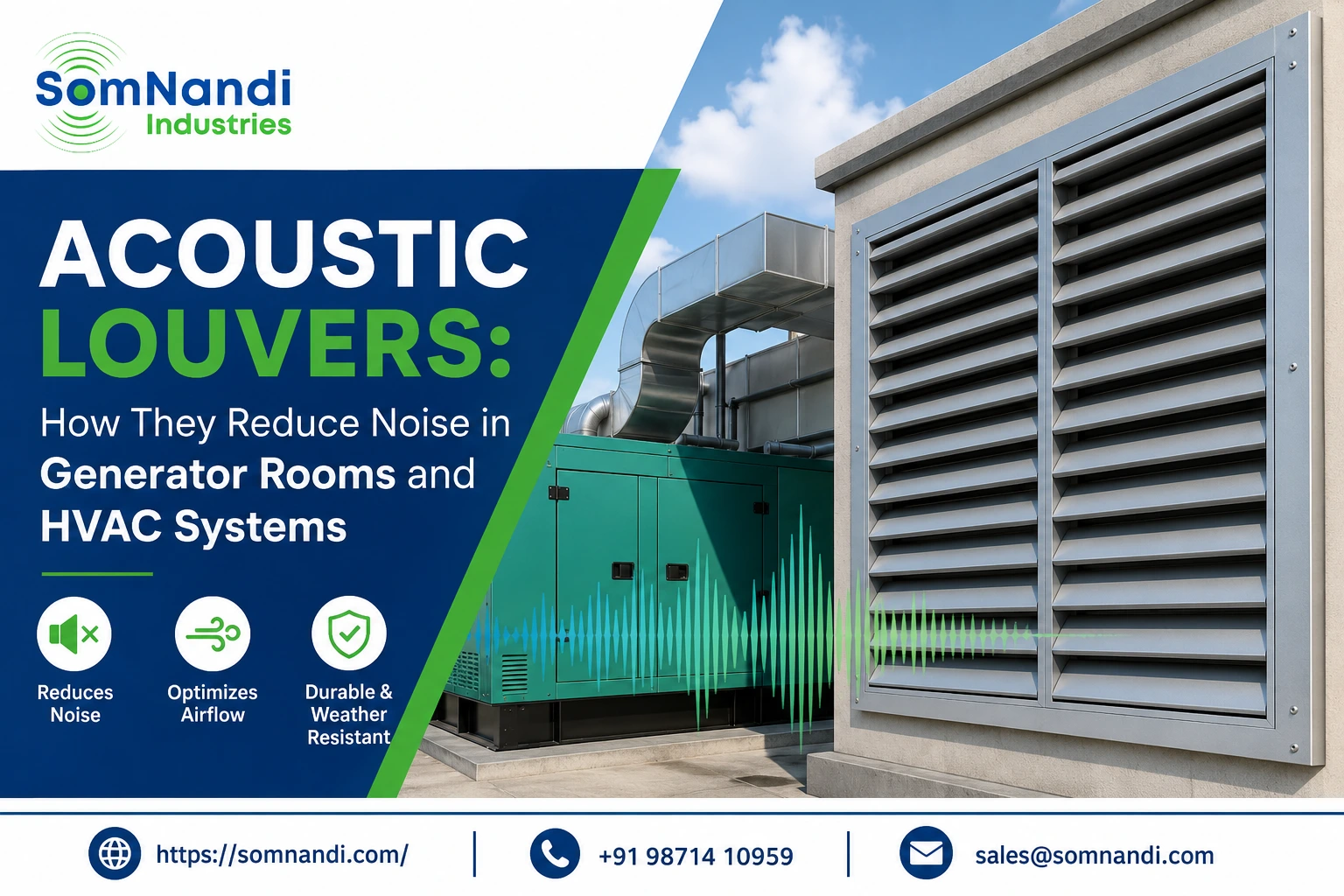
An acoustic louver is a ventilation panel built with internal blades or baffles lined with sound-absorbing material, usually high-density mineral wool or fiberglass, wrapped in perforated metal. As air passes through the angled blade geometry, sound waves are forced to travel a longer, more indirect path. This path exposes the noise to repeated absorption by the acoustic louvers infill, reducing the sound energy that reaches the other side while allowing the air itself to pass through with minimal resistance.
This is fundamentally different from a plain ventilation louver, which is designed only to keep out rain and debris and does very little to reduce sound. This design adds internal splitters and dense insulation specifically to interrupt the sound path, which is why it performs significantly better in decibel reduction even though it looks similar from the outside.
Why Do Generator Rooms Need an Acoustic Louvers for Generator Room Ventilation?
Generator rooms are one of the most demanding applications for noise control because the equipment produces both mechanical noise and exhaust-related sound while requiring a continuous, high-volume airflow for cooling and combustion air. Sealing the room is not an option, since the generator would overheat within minutes. This is exactly where an acoustic louver for generator room openings becomes essential.
Installed at the air intake and exhaust points of the enclosure, these louvers let the generator draw in and expel the air it needs while significantly cutting down the noise breakout that would otherwise disturb nearby offices, residential areas, or hospitals. In commercial and industrial sectors where generator noise is a common source of complaints, a properly sized louver often makes the difference between meeting local noise norms and failing an inspection.
How Do Acoustic Louvers for HVAC Systems Improve Comfort and Compliance?
HVAC equipment such as air handling units, cooling towers, and rooftop plant rooms generates broadband noise that travels easily through any unprotected opening. An acoustic louver for HVAC ductwork and mechanical room openings absorbs this noise before it reaches occupied spaces, which is particularly important in hospitals, hotels, offices, and residential buildings located near rooftop plant equipment.
Because HVAC systems run continuously, even a modest improvement in acoustic louvers performance at each opening adds up to a noticeably quieter building. These louvers used at HVAC intakes and exhausts also help facilities stay within CPCB noise norms and local building regulations, which increasingly require documented sound attenuation at every mechanical ventilation point.
Can Acoustic Louvers for Chillers Reduce Noise Without Restricting Airflow?
Chiller plants and district cooling systems present a similar challenge to generators, high airflow demand combined with strict noise limits, but chillers typically run for longer durations and are often located closer to occupied buildings. Acoustic louvers for chillers are designed with aerodynamic blade profiles that minimize pressure drop, so the chiller does not have to work harder to draw in the air it needs.
A poorly designed louver can restrict airflow enough to raise chiller head pressure, increase energy consumption, and shorten equipment life. This is why this style of louver requires careful technical calculation of free area, blade depth, and insulation density before installation, balancing noise attenuation against the airflow the cooling system requires to operate efficiently.
What Determines Acoustic Louvers Noise Reduction Performance?
Several factors influence acoustic louvers noise reduction levels, and understanding them helps facility teams choose the right specification rather than relying on generic ratings.
- Blade depth and geometry: Deeper blades with more internal surface area generally provide higher attenuation, though this increases pressure drop.
- Acoustic infill density: Rockwool or fiberglass fill in the 48 to 60 kg per cubic meter range is common for balancing sound absorption with fire safety and weather resistance.
- Frequency range: Performance is typically tested and rated across all eight octave bands, since equipment like generators and chillers produce noise across a wide frequency spectrum.
- Free area and airflow velocity: Higher free area improves ventilation but can reduce attenuation, so the two must be engineered together rather than chosen independently.
Testing standards such as ANSI/AMCA 500-L, which governs laboratory methods for rating louver air performance, water penetration, and pressure drop, give engineers a consistent basis for comparing louver noise reduction claims across manufacturers.
How Does SomNandi Industries Engineer Acoustic Louvers for Generator Rooms, Chillers, and HVAC Systems?
SomNandi Industries is a manufacturer of these panels for industrial, commercial, and infrastructure projects across India, serving applications that range from generator rooms and chiller yards to electrical substations, hospitals, and district cooling plants. Every panel is built with galvanized or aluminum construction, internal blade geometry optimized for sound attenuation, and acoustic infill engineered for both noise performance and durability.
SomNandi's louvers use 75mm thick Rockwool infill in the 48 to 60 kg per cubic meter density range, adjustable based on project-specific acoustic calculations. The material is non-combustible when tested in accordance with BS 476 Part 4 and ASTM E-136, and sound absorption is verified in accordance with BS 3638 and ISO 0354. Each project receives AutoCAD drawings for approval, custom fabrication to match site dimensions, and technical support to confirm the louver meets both airflow and CPCB noise compliance requirements before installation.
Conclusion
These panels give facility teams a way to solve two competing requirements at once: the constant airflow that generators, chillers, and HVAC systems need to operate safely, and the noise attenuation required to keep that equipment from becoming a nuisance or compliance issue. Whether the application is a generator room, a chiller enclosure, or an HVAC intake, the right louver design depends on matching blade geometry, infill density, and free area to the specific noise and airflow targets of the project. SomNandi Industries designs and manufactures these panels engineered for exactly this balance, backed by technical calculations and after-sales support for every installation.
Frequently Asked Questions
All of them create some pressure drop, but properly engineered designs balance attenuation with airflow so equipment performance is not compromised.
A regular louver only keeps out rain and debris, while this design adds internal baffles and sound-absorbing material to reduce noise transmission.
Yes, most are built with weather-resistant, non-combustible materials suited for rooftop, outdoor, and industrial environments.
Reduction levels vary by design, but well-engineered panels can meaningfully lower decibel levels across multiple octave bands compared to an open vent.
Yes, sizing, blade depth, and infill density are typically calculated for each site based on the equipment's noise output and airflow needs.
SomNandi Industries is a leading manufacturer of acoustic louvers for generator rooms, HVAC systems, and chiller applications across industrial and commercial projects in India. Contact SomNandi Industries for technical calculations and custom louver design for your facility.