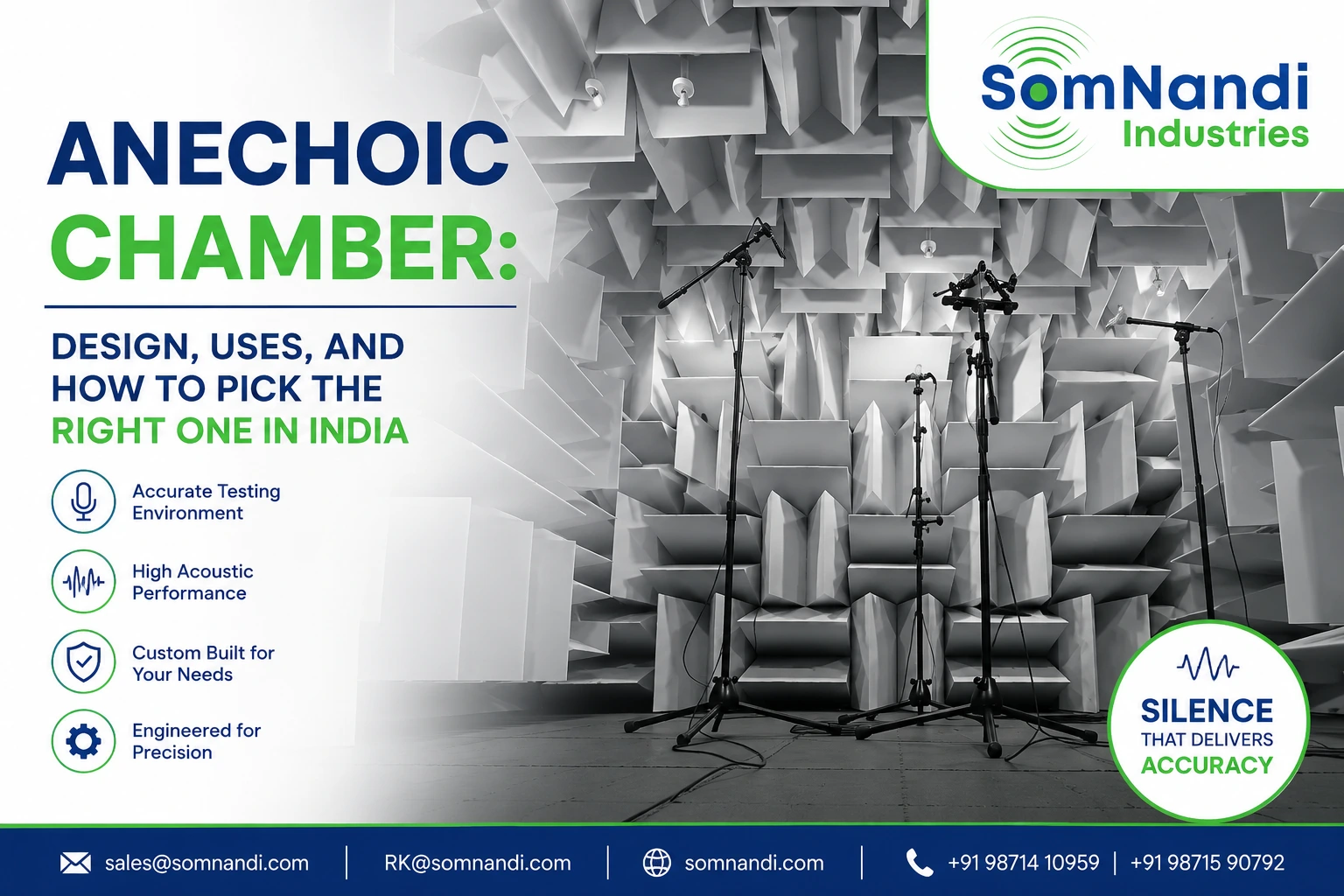
Try doing a sound test in a normal room sometime. You'll hit the same wall every single time — the walls send the sound right back at you. Even a small echo, or just some background hum, can throw off your results way more than you'd guess. That's really the whole point of an anechoic chamber. It gives you a space where you only hear the sound you're actually testing, and not much else.
Engineers rely on these chambers across a lot of industries. Automotive, telecom, defense, consumer electronics — the list keeps going. And as testing rules in India get tougher, the need for chambers that are genuinely built well keeps growing right along with it. This is exactly why picking the right anechoic chamber manufacturer matters so much, usually more than people realize until something goes wrong down the line. SomNandi Industries has spent years on acoustic solutions made to actually last, not just scrape by one inspection and call it done.
What Is an Anechoic Chamber?
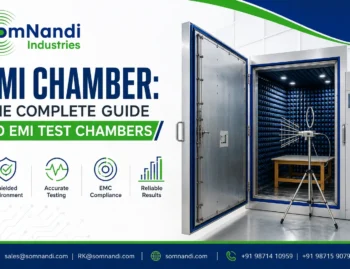
Put simply, it's a room built to stop sound from bouncing back at you. Some setups block electromagnetic waves too. The walls, ceiling, and floor get covered in wedge-shaped absorbers, and those trap the sound instead of throwing it back into the room. What you get is close to a "free field" space — kind of like open air, where sound just travels outward and doesn't come back to bother you.
There are two main types worth knowing here. A fully anechoic chamber absorbs sound on all six sides, no exceptions at all. A semi-anechoic chamber keeps the floor hard on purpose, and that turns out to be useful for ground-plane testing. You'll run into this setup a lot in automotive work specifically.
Anechoic Chamber Design: What Matters Most
Good anechoic chamber design doesn't really start with the room. Honestly, it starts with what you're planning to test inside it. A chamber built for audio testing looks nothing like one built for RF or vibration work, and treating both the same is usually where projects go wrong early. A few things worth getting right from day one:
Absorber shape and material matter first. Wedge shape, depth, density — these decide the lowest frequency the chamber can actually handle well. Get this wrong and low-frequency results turn shaky fast.
Structural isolation matters just as much. Vibration isolation combined with double-wall construction is basically what keeps outside noise from sneaking in.
Room size isn't something you just guess at either. It gets worked out from the size of what's being tested, the frequency range needed, and how much test distance the whole setup actually requires.
And don't skip ventilation and lighting. You still need airflow and light in there, just without either adding noise back into the mix. Acoustic baffled vents and quiet fixtures usually handle that part fine.
SomNandi builds every acoustic anechoic chamber around these basics. Simulation-based design work happens first, so the finished chamber meets IEC, ANSI, or any custom standard a client needs — well before construction ever starts.
Modular Anechoic Chamber: Built for Flexibility
Not every facility has the space, or honestly the budget, for a permanent structure. Fair enough — that's exactly the gap a modular anechoic chamber fills. These use ready-made wedge panels and frames, so they go up, come apart, and move without eating weeks of downtime. If there's any chance your facility might grow, relocate, or need a different setup later on, modular is usually the safer bet here.
Where This Really Helps
Test results end up accurate and repeatable, without background noise quietly messing with the numbers behind the scenes. Results also line up with international acoustic and EMC standards, which saves a lot of trouble down the road. Chamber size can range anywhere from a small desktop unit to a full vehicle chamber, depending on what's actually needed. These chambers tend to hold up a long time too, especially when high-density foam or fiberglass wedges are doing the work. And since errors get caught early, you avoid a good chunk of costly redesign work later on.
Where It Gets Difficult
Nothing here is perfect, so it's worth knowing the downsides upfront. Cost can climb fast, especially for large, fully anechoic builds. These also need a fair amount of floor space, and not every facility has room to spare for that. Fully custom builds get harder to change once construction wraps, since there's no easy way to reconfigure things afterward. Wedge absorbers wear out over time as well, usually from humidity or just plain physical damage. And installation genuinely needs trained technicians, not general contractors — this work is fairly specialized, more than people expect going in.
Anechoic Chamber in India: Why Local Manufacturing Matters
Indian manufacturers are competing on a global level now, in automotive, telecom, aerospace, consumer electronics, pretty much all of it. That's pushed demand for a reliable anechoic chamber in India higher than it's probably ever been before. Building locally cuts lead times down noticeably, makes after-sales support a lot less of a headache, and avoids the delays and extra cost tied to importing from overseas. SomNandi designs, builds, and installs chambers right here in India, so clients get direct access to support instead of waiting weeks on a supplier from somewhere else entirely.
How to Choose the Right Anechoic Chamber Manufacturer
Price shouldn't be the only thing on your checklist here. Look at how the manufacturer handles design work, the quality of absorbers they actually use, their record on compliance, and whether they still show up once installation is done. A well-built chamber is really a long-term investment in how accurate your testing turns out. Cutting corners early almost always costs more later, not less — that part rarely changes.
SomNandi Industries brings together real acoustic engineering knowledge and actual manufacturing skill, whether the need is a small modular unit or a large custom facility.
Frequently Asked Questions
What is the main purpose of an anechoic chamber?
It creates a quiet, echo-free space so acoustic, RF, or vibration testing shows the true results, not noise from the room getting in the way of things.
What is the difference between anechoic and semi-anechoic chambers?
A fully anechoic chamber absorbs sound on all six surfaces. A semi-anechoic chamber keeps the floor hard on purpose, which works well for ground-plane testing common in automotive use.
How long does it take to install a modular anechoic chamber?
Depends a fair bit on size and complexity, but modular builds are usually quicker to put together than a fully custom, permanent structure would be.
Can an anechoic chamber be built for a specific industry?
Yes. Size, absorber type, and internal fittings can all be adjusted for automotive, telecom, defense, aerospace, or consumer electronics testing needs.
Why choose an Indian manufacturer instead of importing a chamber?
Shorter lead times, easier maintenance support, and compliance with local standards — without the extra cost and wait that comes with shipping something in from another country.
It creates a quiet, echo-free space so acoustic, RF, or vibration testing shows the true results, not noise from the room getting in the way of things.
A fully anechoic chamber absorbs sound on all six surfaces. A semi-anechoic chamber keeps the floor hard on purpose, which works well for ground-plane testing common in automotive use.
Depends a fair bit on size and complexity, but modular builds are usually quicker to put together than a fully custom, permanent structure would be.
Yes. Size, absorber type, and internal fittings can all be adjusted for automotive, telecom, defense, aerospace, or consumer electronics testing needs.
Shorter lead times, easier maintenance support, and compliance with local standards — without the extra cost and wait that comes with shipping something in from another country.
Looking to build a reliable anechoic chamber for your facility? Get in touch with SomNandi Industries to talk through your acoustic testing needs and get a design made around your application.