
Summary - Selecting the right blast proof door manufacturers in India can determine whether a facility survives an explosion event with minimal damage or suffers catastrophic structural and human loss. Industries handling compressors, transformers, boilers, and hazardous chemicals cannot treat a blast door as a standard procurement item, since even small design errors in gasket sealing, hinge strength, or overpressure rating can compromise the entire safety system. Working with experienced blast proof door manufacturers in India ensures that every door is engineered, tested, and certified to withstand the specific explosion risk of the facility it protects.
What Is a Blast Door and Why Does It Matter for Industrial Safety?
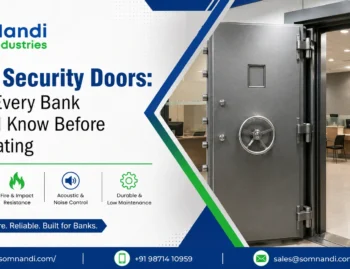
A blast door, also called a blast resistant door or blast proof door, is a specially engineered barrier designed to withstand the pressure wave, fragmentation, and heat generated by an explosion. This is precisely the kind of product that separates experienced blast proof door manufacturers in India from general steel fabricators, since the design must distribute explosive force across the surrounding wall structure rather than allowing it to breach the opening.
These doors are critical wherever explosion risk exists, including compressor rooms, transformer enclosures, ammunition bunkers, chemical storage rooms, and nuclear facilities. A well-engineered blast resistant door does more than block pressure. It also maintains fire integrity, prevents flying debris from entering protected areas, and in many designs, offers protection against secondary hazards such as gas leaks caused by pressure imbalance.
What Should You Look for in Blast Resistant Doors Manufacturers?
Not every fabricator with welding equipment can produce a certified blast resistant door. Among blast proof door manufacturers in India, reliable blast resistant doors manufacturers should be able to demonstrate a combination of engineering, testing, and project experience before being trusted with a critical safety installation.
Key factors to evaluate include:
- Proven overpressure ratings: Manufacturers should provide documented peak reflected overpressure capacity, often tested up to tens of bar depending on the application.
- Fire resistance certification: A quality blast proof doors should carry a recognized fire rating, ideally tested in accordance with international standards such as BS 476.
- Customization capability: Since blast security requirements rarely fit a single pre-engineered model, manufacturers need in-house design teams capable of tailoring doors to each project's explosion scenario.
- Track record with similar industries: Experience supplying doors to petrochemical plants, defense sites, or power stations indicates the manufacturer understands sector-specific compliance needs.
What Are the Typical Blast Resistant Doors Specifications to Check?
When reviewing blast resistant doors specifications, engineers and procurement teams should look closely at several technical parameters rather than relying on generic marketing claims.
Common specification points include peak reflected overpressure rating (measured in bar or kPa), reflected impulse duration, fire rating in minutes, door configuration (single-wing or double-wing), and maximum available size. Sealing systems also matter significantly, since high-performance single or multiple gasket arrangements are what maintain airtightness and pressure integrity during and after a blast event. Reviewing these blast resistant doors specifications against your facility's actual explosion risk profile, rather than accepting a standard catalog size, is essential for genuine protection.
Are Sliding Blast Doors a Better Fit Than Swing Designs for Certain Facilities?
Sliding blast doors are increasingly specified in facilities where space constraints, high-frequency access, or automation requirements make a traditional swing door impractical. These doors can be integrated with hydraulic, pneumatic, or electric operating systems, allowing controlled automatic movement while still meeting the same overpressure and sealing standards as swing-type units.
Sliding blast doors are particularly useful in petrochemical plants and power facilities where personnel need quick, repeated access without compromising the door's structural blast resistance. The choice between sliding and swing configurations ultimately depends on the building layout, evacuation planning, and how frequently the opening is used during normal operations.
Where Are Industrial Blast Doors and Explosion Proof Doors Typically Installed?
Industrial blast doors and explosion proof doors are installed wherever equipment or materials carry a credible explosion risk. Typical applications include:
- Compressor and pump rooms in oil and gas facilities
- Transformer and switchgear enclosures in power plants
- Chemical and hazardous material storage rooms
- Military bunkers and ammunition storage sites
- Nuclear power stations and research laboratories
In each case, explosion proof doors are selected based on the specific blast load the facility could realistically face, and this is where consulting experienced blast proof door manufacturers in India early in the design process pays off, taking into account factors like standoff distance, charge weight, and the surrounding structure's ability to absorb residual force.
How Does SomNandi Industries Stand Out Among Blast Proof Door Manufacturers in India?
SomNandi Industries has established itself among blast proof door manufacturers in India through a combination of engineering depth and proven project delivery. SomNandi's blast resistant doors are built to endure overpressures up to 40 bar peak reflected overpressure, with fire resistance ratings of up to 180 minutes in accordance with BS 476 Part 20 and 22 standards, and can be fabricated in sizes up to 4 meters wide by 6 meters high with custom dimensions available on request.
SomNandi Industries has supplied blast resistant doors to major industrial clients, including a door engineered for 24 bar peak pressure for Laxmi Organic Industries and a blast resistant fire rated double leaf steel door supplied to L&T. Beyond standard blast doors, SomNandi Industries also manufactures blast resistant valves, bullet resistant doors, blast resistant enclosures, and blast resistant building structures, giving industrial clients a single, experienced partner for comprehensive explosion protection across a project.
Conclusion
Choosing among blast proof door manufacturers in India requires looking past price alone and evaluating engineering capability, tested overpressure performance, fire rating, and real project experience in your specific industry. A properly specified blast resistant door protects not just the opening it covers, but the people and equipment behind it, which makes the choice between blast proof door manufacturers in India one of the most consequential decisions in any high-risk industrial project. SomNandi Industries brings the design expertise, testing standards, and delivery history needed to meet these demands, offering customized blast doors, sliding blast doors, and complete blast protection solutions for facilities across India.
Frequently Asked Questions
A fire door is rated only for heat and flame resistance, while a blast door is engineered to withstand explosive overpressure, fragmentation, and often fire simultaneously.
It varies by design, but industrial blast doors are commonly rated from a few bar up to 40 bar or more depending on the facility's risk profile.
Yes, many sliding blast doors use hydraulic, pneumatic, or electric operating systems for controlled automatic movement without reducing blast resistance.
Often yes, since explosion risk, standoff distance, and building structure vary significantly between projects and rarely match a single pre-engineered model.
Oil and gas, petrochemical, defense, nuclear power, and chemical storage facilities are among the industries with the highest demand for explosion proof doors.
SomNandi Industries is a trusted name among blast proof door manufacturers in India, delivering engineered blast resistant doors, sliding blast doors, and complete explosion protection solutions for industrial, defense, and infrastructure projects. Contact SomNandi Industries to discuss custom blast door specifications for your facility.