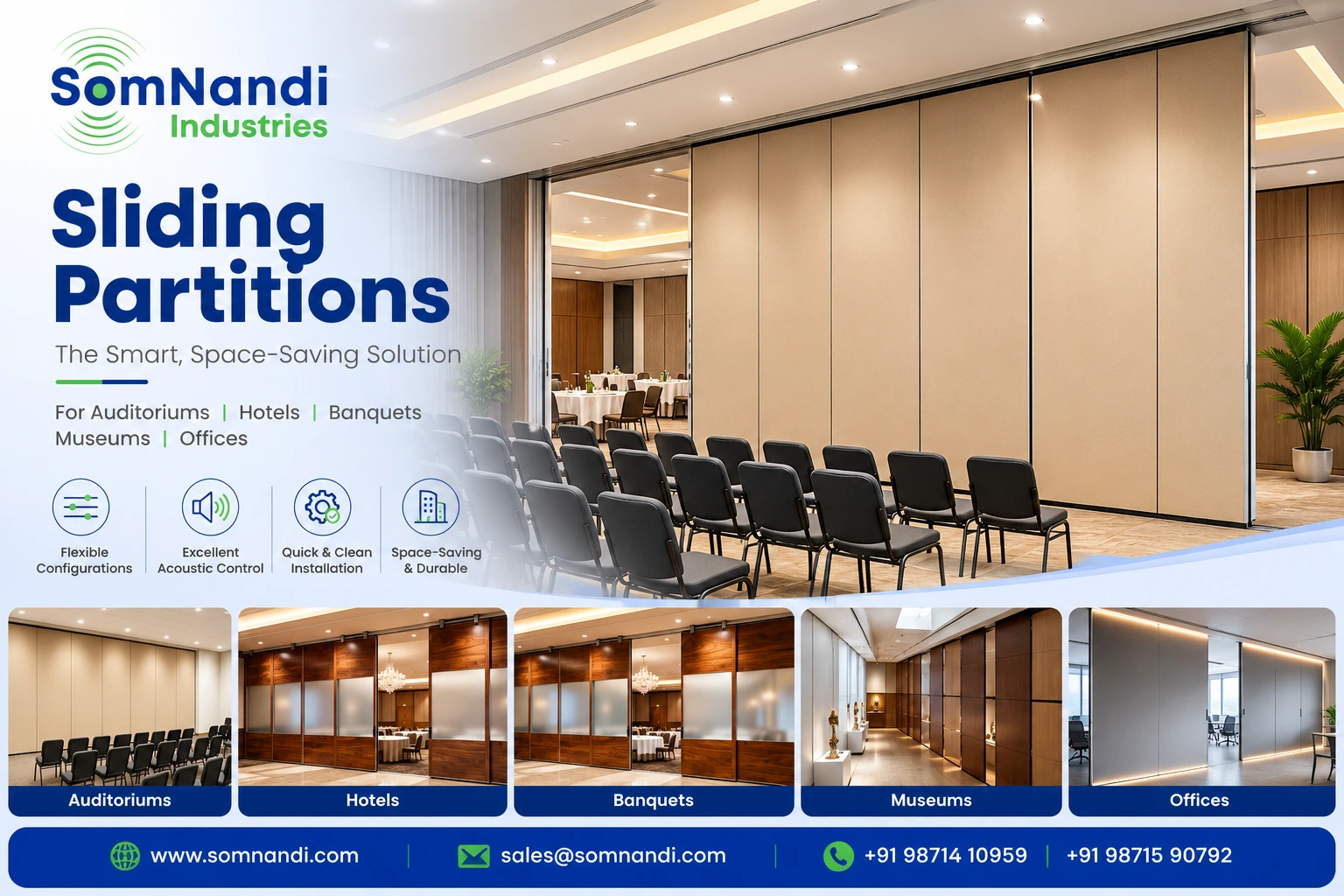
Summary: Modern commercial spaces need flexibility more than ever before. Sliding Partitions have emerged as one of the most practical answers to this need, allowing large halls, offices, and hospitality venues to reshape their layout in minutes rather than committing to permanent walls. Instead of losing usable space to fixed construction, businesses can now open up or divide a room on demand, adapting instantly to changing crowd sizes, events, or work requirements.
Why Sliding Partitions Matter Today
As real estate costs rise and multi-purpose usage becomes the norm, architects and facility managers are turning to Sliding Partition to get more value from every square foot. A single hall fitted with a quality partition system can serve as a wedding venue one evening and a conference space the next morning. This adaptability, combined with strong acoustic control, is why sliding wall systems are increasingly specified in new commercial builds and renovation projects alike across India.
What Are Sliding Partitions and How Do They Work?
Sliding Partitions are movable wall panels that run along a top-hung track system, allowing them to glide open or closed without the need for floor guides in most premium designs. Each panel connects to the next, folding or sliding into a stack when not in use, and locking into place to form a continuous, stable wall when deployed. Quality systems use soft-stop and anti-jump mechanisms so panels move smoothly and safely, whether operated manually or through a motorized system. Acoustic-rated versions include sealed edges and dense core materials that significantly reduce sound transfer between divided sections.
Why Are Sliding Partitions Becoming Essential for Commercial Spaces?
Fixed walls limit how a space can be used over time. Sliding Partitions remove that limitation by letting one room function as several, without construction delays or added cost. They also support better acoustic management, energy efficiency (since unused sections can be closed off), and a cleaner aesthetic compared to temporary drapes or screens. For businesses managing multiple event types or workflows in the same building, this flexibility often translates directly into better space utilization and revenue.
How Do Sliding Partitions for Auditoriums Improve Event Management?
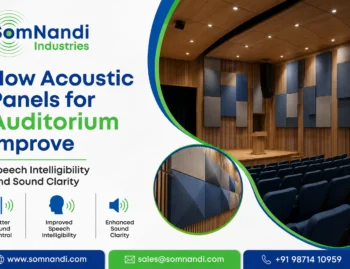
Auditoriums frequently need to host several sessions, seminars, or training programs at once. Sliding Partitions for Auditoriums allow one large hall to be divided into two or more independent sections, each with controlled acoustics so that simultaneous events do not interfere with one another. This means an auditorium can run a keynote session in one zone and a breakout workshop in another, without disturbance, while still retaining the option to open the full space for larger gatherings.
Why Do Hotels Prefer Sliding Partitions for Banquets and Conferences?
Hotels operate on tight scheduling, often running multiple functions in the same block of time. Sliding Partitions for Hotels give banquet and conference teams the ability to reconfigure a single large hall into smaller private rooms within minutes. This is particularly valuable for hosting a wedding reception, a corporate meeting, and a private dinner on the same day, using the same physical space. Beyond functionality, these partitions are finished in wood, laminate, glass, or fabric, so they blend into premium hotel interiors rather than looking like a temporary fix.
What Role Do Sliding Partitions Play in Banquet Halls?
Banquet halls rarely host just one event type at a time, especially during peak seasons. Sliding Partitions for Banquets let venue managers split the hall according to guest count, so a smaller gathering does not feel lost in an oversized room, and a larger one can access the full floor area when needed. For sound-sensitive functions such as speeches or live music, acoustic sliding folding partitions prevent noise from one section bleeding into another, keeping each event comfortable and self-contained.
How Do Sliding Partitions Support Flexible Layouts in Museums?
Museums need to rotate exhibitions, manage visitor flow, and sometimes restrict access to certain sections without shutting down the entire facility. Sliding Partitions for Museums make this possible by creating temporary walls that can section off a gallery for a new installation, guide foot traffic along a specific path, or protect a display area during setup. Because these partitions operate silently and glide smoothly, they do not disrupt the calm, controlled atmosphere museums typically maintain.
Can Sliding Partitions Improve Privacy and Efficiency in Offices?
Open-plan offices often struggle to balance collaboration with the need for privacy. Sliding Partitions for Offices address this by allowing a shared area to convert into a private meeting room, a quiet focus zone, or a larger collaboration space, all without permanent construction. This is especially useful for growing companies that need their floor plan to evolve as team sizes and work styles change, without the expense of renovating every time requirements shift.
What Features Should You Look for in a Quality Sliding Partition System?
| Feature | Benefit |
|---|---|
| Space Optimization | Efficiently divides large halls, banquet spaces, or open offices into functional zones. |
| Acoustic Performance | Reduces sound transfer between sections for better privacy and comfort. |
| Customizable Finishes | Available in wood, glass, laminate, or fabric to match any interior. |
| Smooth Operation | Soft-stop and anti-jump mechanisms with manual or motorized control. |
| Durability | Heavy-duty, low-maintenance materials built for long-term commercial use. |
| Versatility | Suitable for offices, banquet halls, classrooms, hospitals, and convention centers. |
Why Choose SomNandi Industries for Sliding Partition Solutions?
SomNandi Industries is one of India's established manufacturers of premium acoustic sliding partitions, with a strong track record across corporate, hospitality, and institutional projects. The company handles complete turnkey delivery, from site assessment and custom design through manufacturing, installation, and after-sales support. Every panel is built with precision hardware and durable track systems, and finishes can be tailored to match wood, laminate, glass, or fabric interiors. This end-to-end approach is one reason SomNandi partitions are installed in banquet halls, corporate offices, hotels, and government buildings nationwide, including a recent large-scale Banquet Hall Sliding Partition installation completed at Hyatt Goa, engineered without floor tracks for a clean, seamless finish.
Conclusion
Sliding Partitions have moved from being a convenience feature to a genuine architectural necessity for spaces that need to serve more than one purpose. Whether it is an auditorium running parallel sessions, a hotel managing back-to-back banquets, a museum reshaping its galleries, or an office balancing openness with privacy, a well-engineered sliding partition system delivers flexibility without compromising on acoustics or aesthetics. Working with an experienced manufacturer like SomNandi Industries ensures the system is built to last, properly installed, and tailored to the specific demands of the space it serves.
Frequently Asked Questions
Acoustic-rated sliding partitions with sealed edges and dense cores can significantly reduce noise transfer, though performance depends on panel quality and installation.
Yes, many premium systems use top-hung tracks only, keeping the floor clean and free of guide rails or trip hazards.
Since panels stack or fold into a compact section when open, they free up the full floor area instantly, unlike permanent walls that fix the layout.
Quality systems with soft-stop and anti-jump hardware are built for frequent operation in banquet halls, offices, and auditoriums without excessive wear.
Common options include wood, laminate, glass, and fabric, allowing the partition to match existing interior design rather than standing out as a temporary addition.