Summary: An Anechoic Chamber is one of the most fascinating engineering achievements in acoustics, capable of creating an environment so quiet that some chambers have recorded sound levels below zero decibels. By eliminating nearly all sound reflections and blocking outside noise, these specialized rooms give engineers and researchers a controlled space to measure sound with extreme precision.
A Closer Look: Why Silence Is Engineered, Not Accidental
Achieving true silence inside a room is far more complex than simply soundproofing the walls. An Anechoic Chamber works by combining structural isolation with wedge-shaped absorptive materials that trap sound waves before they can bounce back into the room. Understanding how this absorption actually happens reveals why these chambers are essential wherever accurate acoustic measurement is required, from automotive testing labs to aerospace research facilities.
What Is an Anechoic Chamber and Why Is It So Quiet?
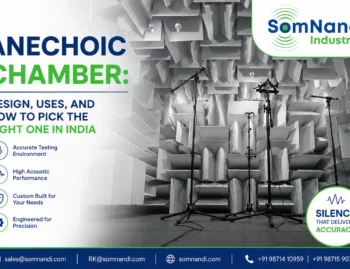
An Anechoic Chamber is a specially designed soundproof room built to absorb sound reflections almost entirely while isolating the space from external noise. The term itself comes from the Greek word for "without echo," which describes exactly what these rooms achieve. The walls, ceiling, and often the floor are lined with high-performance acoustic wedges made from fiberglass or mineral wool, engineered specifically to prevent sound waves from reflecting back into the room. This combination of absorption and isolation is what makes an Anechoic Chamber one of the quietest environments that can be created.
How Do the Wedge Panels Actually Absorb Sound Waves?
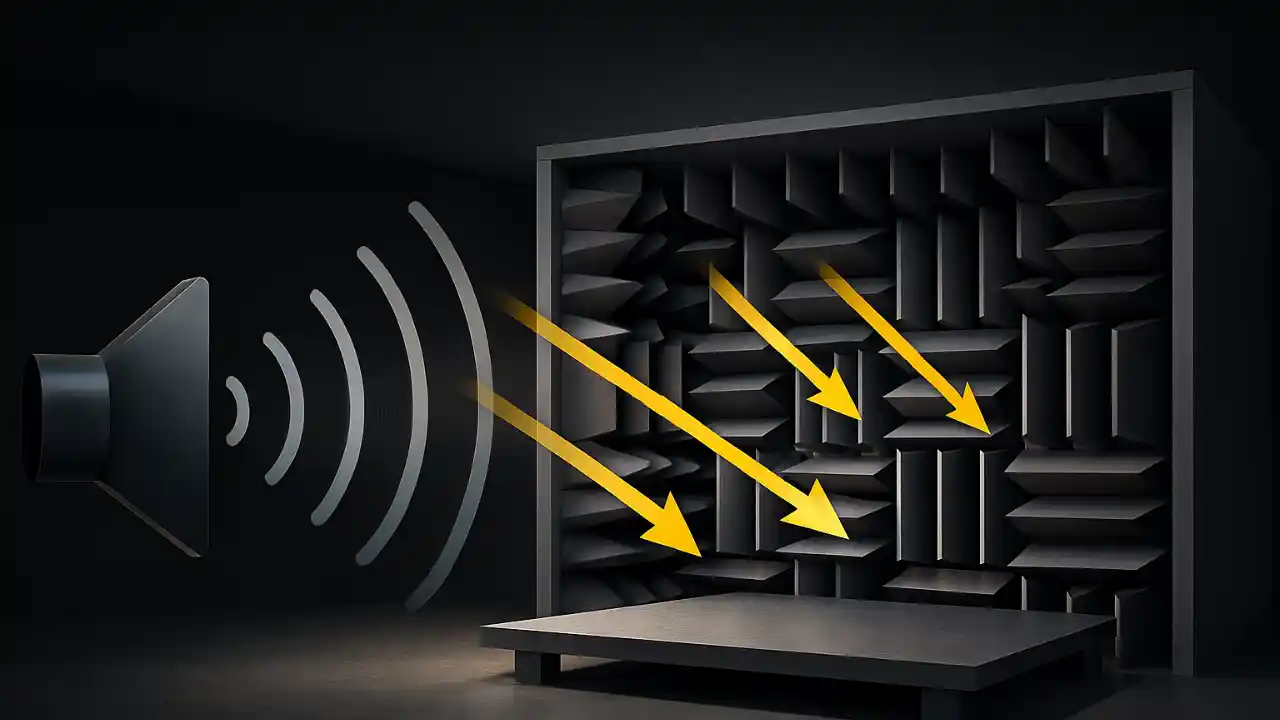
The science behind sound absorption in an Anechoic Chamber comes down to geometry and material density. The pyramid or wedge-shaped panels lining the chamber increase the surface area a sound wave encounters as it enters the room. Instead of hitting a flat wall and bouncing straight back, the wave strikes the angled wedge surfaces repeatedly, losing energy with each contact as it converts into small amounts of heat within the fibrous material. By the time the wave has traveled through the wedge structure, almost none of its original energy remains to reflect back, which is why a properly designed chamber can achieve near-total sound absorption across a wide frequency range.
What Is the Purpose of an Anechoic Chamber in Real-World Testing?
The purpose of an Anechoic Chamber is to remove every variable that could distort a sound measurement. In a normal room, reflected sound waves interfere with the original signal, making it difficult to isolate the true acoustic characteristics of a product or component. Inside an Anechoic Chamber, engineers can measure noise, vibration, and harshness (NVH) data, test loudspeakers, evaluate microphone sensitivity, or conduct hearing research without interference from echoes or outside sound. This level of accuracy is critical in industries where even small measurement errors can affect product design, certification, or compliance with acoustic standards.
What Is the Difference Between a Full Anechoic Chamber and a Semi Anechoic Chamber?
A full anechoic chamber absorbs sound on all six interior surfaces, including the floor, and is typically used for applications requiring a completely free-field acoustic environment, such as antenna testing or high-precision audio calibration. A semi anechoic chamber, on the other hand, keeps a hard, reflective floor while treating the walls and ceiling with absorptive wedges. This design is common in automotive NVH testing, where vehicles or engines need to rest on a solid, load-bearing surface while the surrounding space still delivers highly controlled acoustic conditions. Both configurations serve different testing needs, and the right choice depends on the application and equipment involved.
How Much Sound Rejection Can These Chambers Achieve?
Performance is typically measured in decibel (dB) rejection, which reflects the ratio of direct sound to reflected sound inside the chamber. Well-engineered semi anechoic chambers can deliver sound rejection of up to 80 dB across the 20 Hz to 20 kHz range, covering the full spectrum of human hearing. Some of the most advanced facilities in the world have recorded negative decibel readings inside their chambers, a striking demonstration of how effectively these spaces isolate sound.
Where Are Anechoic Chambers Used Across Industries?
An acoustic anechoic chamber supports a wide range of applications. Automotive manufacturers rely on them for NVH testing of engines, exhaust systems, and vehicle components. Aerospace and defense sectors use them to evaluate aircraft parts, radar systems, and satellite equipment in controlled acoustic and electromagnetic conditions. Audiologists and hearing researchers depend on audiometric chambers for calibrating equipment and conducting tests without background interference. Recording studios use them to capture audio with zero echo, while electronics manufacturers use compact or portable chambers to test noise emissions from smaller devices and components.
What Should You Look for in an Anechoic Chamber Manufacturer?
Choosing the right anechoic chamber manufacturer determines how accurate and durable the final chamber will be. Look for a company with proven experience across ISO standards such as ISO 3744, ISO 3745, and ANSI S12.55, along with multi-disciplinary expertise spanning civil, architectural, electrical, and instrumentation engineering. Reinforced flooring, eco-friendly acoustic materials, and customizable layouts for different testing scenarios are also important factors. A manufacturer offering turnkey solutions, from feasibility studies and design through installation and commissioning, ensures a smoother project with fewer coordination issues.
Why SomNandi Industries for Anechoic Chamber Solutions?
SomNandi Industries specializes in the design, fabrication, and installation of high-precision Anechoic Chambers built to meet international standards, including ISO 3744, ISO 3745, and ANSI S12.55. The company's chambers are engineered for complete soundproofing, robust structural integrity, and precision testing environments suited to automotive, aerospace, electronics, and audio/video applications. With ISO 9001:2015 certified quality control and end-to-end turnkey delivery, SomNandi Industries provides customized chamber solutions using advanced acoustic wedges and reinforced construction, ensuring long-term durability and reliable measurement accuracy for every client.
Conclusion
The remarkable silence inside an Anechoic Chamber is the result of careful engineering, not coincidence. Through precisely shaped absorptive wedges, reinforced structural isolation, and adherence to strict acoustic standards, these chambers create environments capable of near-total sound absorption. Whether the requirement is a full anechoic chamber for free-field testing or a semi anechoic chamber for automotive NVH analysis, working with an experienced provider like SomNandi Industries ensures the chamber delivers the accuracy, durability, and performance that critical testing applications demand.
Frequently Asked Questions
The wedge shape increases surface area and forces sound waves to reflect multiple times, losing energy with each bounce until almost nothing reflects back.
Yes, some highly advanced chambers have recorded readings below 0 dBA, since the decibel scale is logarithmic and referenced to the threshold of human hearing.
A soundproof room mainly blocks outside noise, while an anechoic chamber both blocks outside noise and absorbs internal reflections to eliminate echo entirely.
No, semi anechoic chambers intentionally keep a hard floor to support heavy test equipment like vehicles, while full anechoic chambers treat all six surfaces.
With quality materials and proper maintenance, wedge panels and structural components in a well-built chamber can perform reliably for many years of testing use.